
For four years, walking was probably the most consistent habit in our lives.
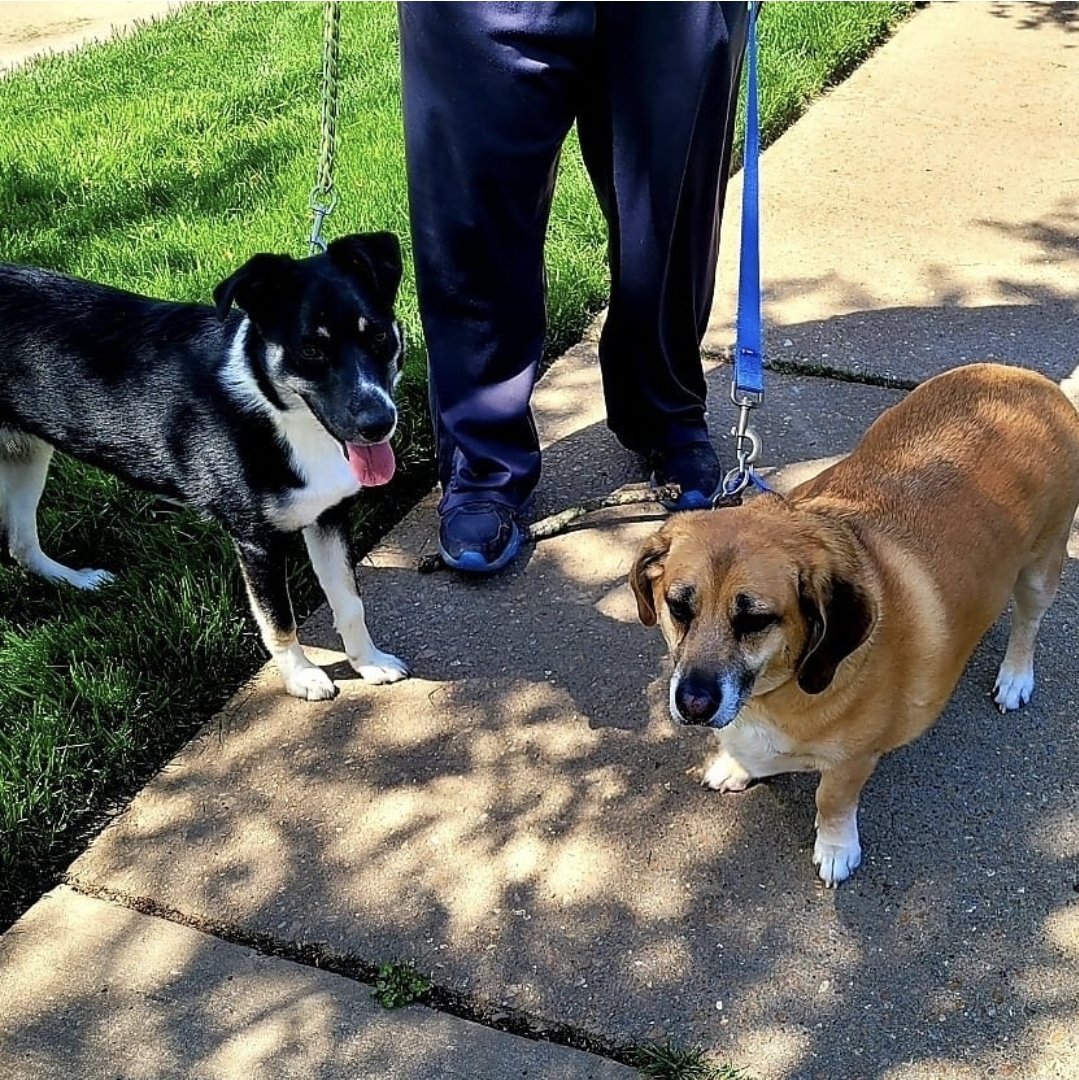
We didn’t start because we’d decided to become people who walked every day. Tom had his second hip replaced in August 2020 and needed to move as part of his recovery. Around the same time, we had Gracie, our Aussie Shepherd–Border Collie mix, who made it immediately clear that going outside every day wasn’t optional.
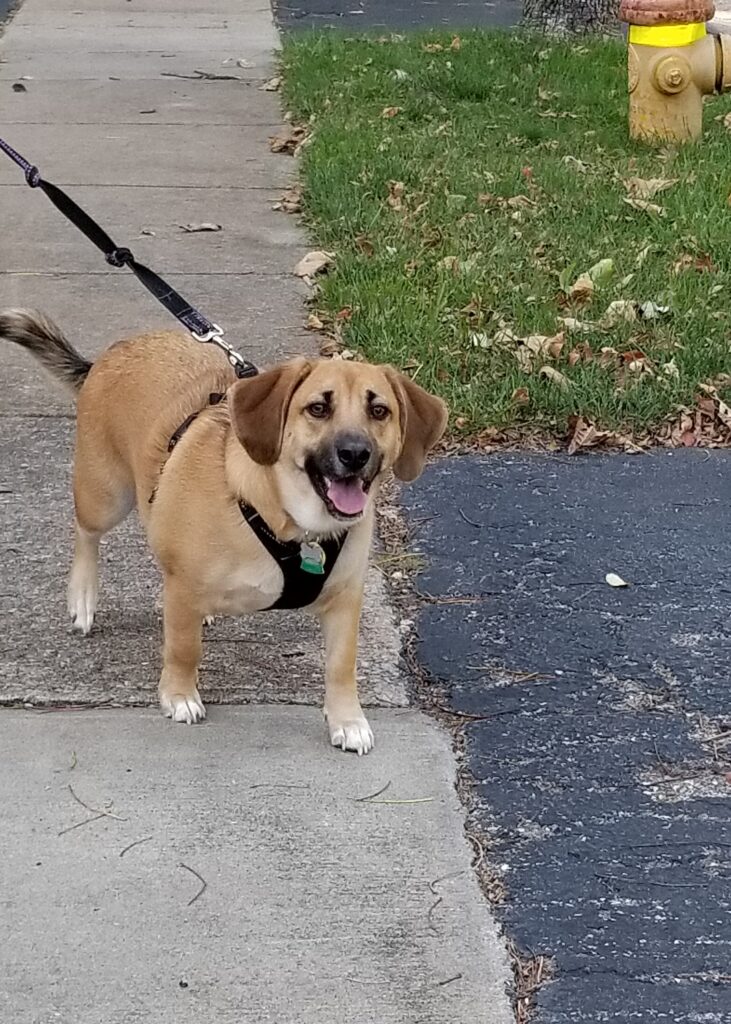
Gus came too, although enthusiasm took longer. He’s a German Shepherd–Corgi mix with short legs, a big personality, and a longstanding suspicion that unnecessary exertion should be avoided whenever possible.
So we walked.
At first, it was half a mile. Cul de sac to cul de sac. Tom was rebuilding after two hip replacements, Gracie was trying to drag us into the next county, Gus stopped to investigate everything, and I was somewhere in the middle.
The walks got longer. Half a mile became a mile, then two. Tom got stronger. I got fitter. The dogs adjusted to the routine.
Somewhere along the way, I started looking forward to it. I had never looked forward to exercise before.

What Walking Actually Gave Us
It’s easy to talk about walking in numbers. Steps, miles, pace, calories, minutes per week. Those things can be useful, but they’re not what I remember when I think about those four years.
For Tom, the walks were part of getting his body back. He’d spent a long time before surgery dealing with pain and a shrinking range of what he could comfortably do. Afterward, every additional block was something concrete. Recovery wasn’t theoretical when he could walk farther than he could the week before.
For me, walking gave my brain somewhere to go when it wouldn’t stop working. I’m always thinking ahead — what needs to happen next, what I forgot, what needs fixing, what I’m doing tomorrow. On a walk, some of that settles down without my deliberately trying to make it settle down.
And for both of us, walking gave us a surprising amount of time together.
There are conversations that happen when you’re walking side by side that don’t seem to happen when you’re sitting across from each other trying to have a conversation. We’d leave with something on our minds and talk it through somewhere between one cul de sac and the next. Other days we barely talked at all.
We noticed neighbors we’d previously only waved to from the car. We watched the same streets change through the seasons. Sometimes we’d leave tired from the day and come home still tired, but better.
None of that showed up on a fitness tracker.

Then We Stopped Walking So Much
Life changed.
We moved. Our schedules changed. Work got busier. The routine that had been almost automatic for years became sporadic.
And that’s when I understood what the walks had been doing.
I expected to miss the exercise. What surprised me was everything else I missed. I missed the way a walk divided the day into before and after. I missed seeing what had changed in the neighborhood since the week before. I missed the conversations with Tom. I missed having thirty minutes when there wasn’t anywhere else I needed to be or anything particularly productive I was supposed to accomplish.
I missed the rhythm of it — and sometimes losing a habit is what shows you why you wanted it in the first place.
Somewhere Along the Way, We Complicate Walking
Walking is one of the simplest forms of movement available to most people, and we’re remarkably good at turning it into another thing to perform correctly.
How many steps did I get? How far did I go? Was my pace fast enough? Does twenty minutes count? I missed three days — have I fallen off again?
I’ve done versions of this too. But four years of walking, followed by a stretch of not walking nearly as consistently, changed the way I think about it.
The walk doesn’t stop being useful because it was twenty minutes instead of an hour. The previous four years don’t disappear because life disrupted the routine. Missing a few days doesn’t require starting over. You go again.
That’s especially obvious to me now because coming back to walking hasn’t felt like beginning from scratch. It feels like returning to something we already know belongs in our lives.
What Four Years Built
There were physical changes, of course. Tom’s body works differently than it did before his surgeries. Mine changed too. Walking gave us a baseline of movement that made stairs, long days and eventually other kinds of exercise easier.
But walking also became the first piece of something larger for me.
Strength training came later. So did getting up at 4 a.m. to work out before clinical rotations when I went back to school. My ideas about what I wanted my body to be capable of changed considerably once I started working in healthcare.
The walk came first. Not because walking is some secret gateway habit that automatically transforms everything else. It was simply the first form of movement that became ordinary enough to stop requiring a debate every time we did it. That’s a useful thing to build.
Coming Back Looks Different
We’re walking again, but it doesn’t look exactly like those first four years.
We live in a different neighborhood. Our schedules are different. Our bodies are different. Some walks are longer and some are twenty minutes because that’s what fits. Sometimes one of us asks after dinner, “Want to go for a walk?” and that’s the entire plan.
I’m okay with that.
I don’t need walking to prove that I’m disciplined, and I don’t need a streak to make a walk count. I want it because it supports a lot of things I care about at once: physical capability, time outside, conversation with Tom, time with the dogs, and a little space between one part of the day and the next.
That turned out to be considerably more valuable than the exercise alone.
If You Want to Start Walking
Start smaller than you think you need to.
Our first walks were about half a mile because that was appropriate for where Tom was in his recovery. Yours might be ten minutes around the neighborhood. It might be farther. The distance isn’t particularly important at the beginning.
Give the walk somewhere to live in your day. Make it easy to leave. Walk with somebody if that makes you more likely to go. Adjust for weather instead of assuming every walk has to happen under ideal conditions. And when you miss a few days, don’t turn returning into a larger event than it needs to be — just go for another walk.
Four years of walking taught me plenty about consistency and physical capability. Losing the routine for a while taught me something else.
Walking was never really about the walking. It was about everything that happened because we went.
Disclaimer: This content is for educational and informational purposes only and is not intended as medical advice. Always consult a qualified healthcare professional before making changes to your exercise or health routine.
Every Friday, I send one observation that didn’t make it onto the blog. If you’d like to be part of that conversation, I’d love to have you. Free. Subscribe →