
I had days off and a list. Real plans — things I actually wanted to do. I finally had the time. And I still couldn’t start. Why can’t I start when everything is lined up? That’s the question this long weekend answered for me.
The list was there. I was there. And somehow the distance between me and the first item on it felt enormous. I’d think about at it and feel tired before I’d done a single thing. So I’d do something else — something small, something easier, something that wasn’t really the point. Or I’d avoid doing anything at all – scroll, put on a show “while I drink my coffee”. And then the day would go. And then another one. And my list and ambitions sat exactly where I’d left them.
By Sunday I finally moved. I started by getting the brisket started early. No sitting down. Then I tackled the next thing. And the next. Got things done. Felt like myself again.
But I’d lost most of my time off to a kind of paralysis I didn’t have a good name for, because it didn’t look like a problem from the outside. I had time. I had a plan. I had the long weekend I’d been waiting for.
Busy Weeks Don’t Have This Problem
When the week is full — long shifts, a packed schedule, the kind of tired where you’re counting hours — there’s no negotiating with the list. You know what you have time for and what you don’t. Decisions get made by necessity. The day has shape because the demands give it shape. You hustle to keep up and use your time wisely.
There’s a strange steadiness in that. Not ease — the hard weeks aren’t easy. But clarity. You’re not standing in front of an open week trying to decide where to begin. You already know. The constraints choose for you.
The open week puts all of that back in your hands. Every hour is a decision. Every item on the list is optional in a way it isn’t when time is short. And you’re always busy so maybe you just need to rest? You deserve it right? And somehow, too much room can be harder to work with than not enough. And the things you’ve been waiting to do – well, they get put off again until “next time”.
The List Wasn’t the Problem
The list was fine. It’s what I wanted to do. The problem was that I couldn’t see it clearly. I want to do too much and have to balance that with what I have to do.
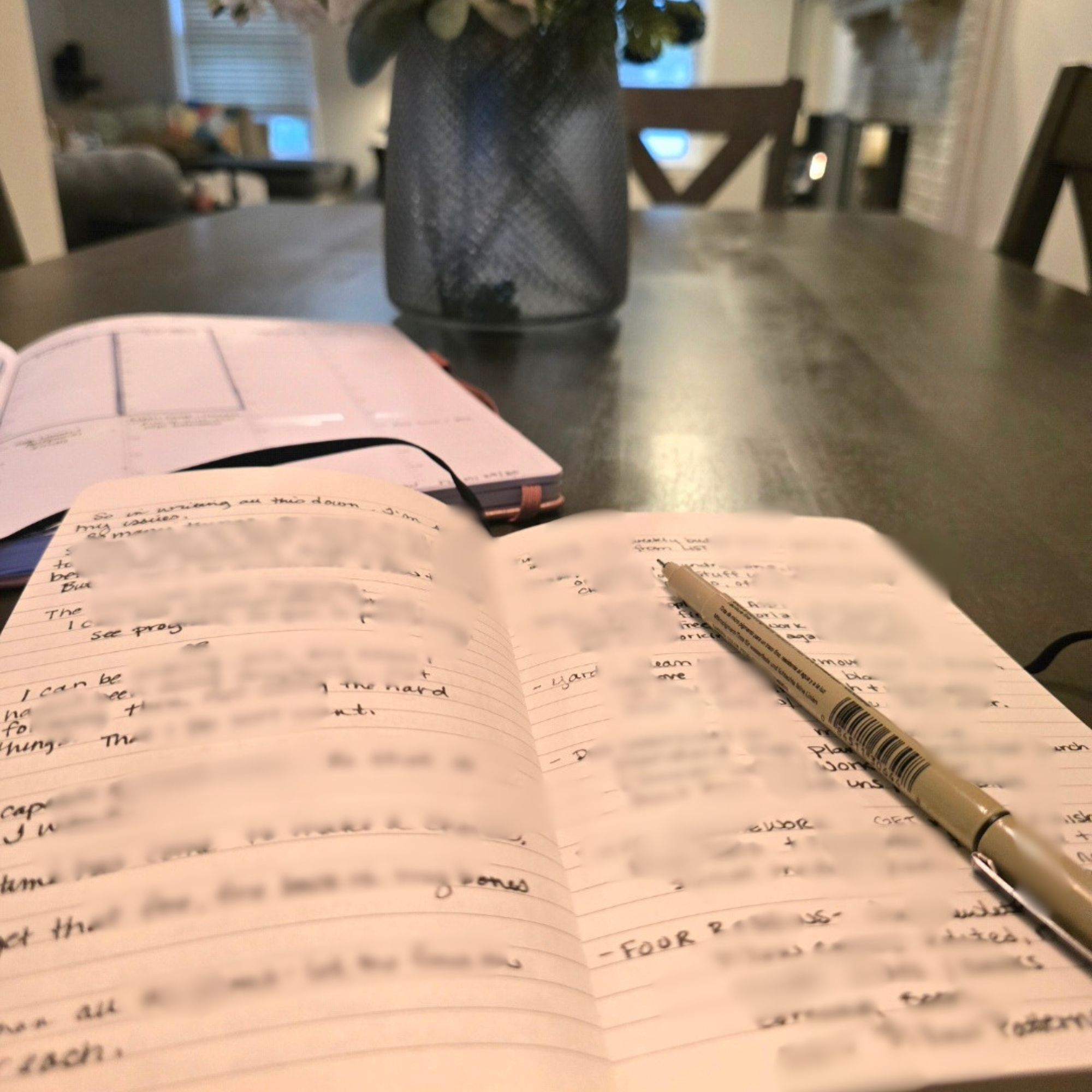
I had things written down everywhere as well as a running list in my head — house, yard, finances, Sam, personal goals, Handcrafted Adventure, Fourrobbins — across all my desires and responsibilities. Each area had its own pile. It wasn’t until I actually sat down and wrote it all out in one place that I could see what was happening. The list wasn’t too short. It was too big to have a beginning.
The intentions were real. But the tug between desire and responsibility caused the thread between here and forward to go quiet. That’s drift — and it’s the same gap that shows up when you have goals but no real direction. Plenty to move toward, but nothing telling you which way is forward right now.
What Actually Worked
Once I could see the whole picture, I did something simple. I picked one or two things from each area — not the most important thing, not the thing with the most riding on it. Just one or two small, completable things per category. House. Yard. Finances. Sam. Personal. HCA. Fourrobbins.
Then I picked one to start with – the brisket. Not because it was the right one. Just because it was first and I had to start it early in the morning.
Once I was in motion, the next thing was obvious. I didn’t have to decide — I was already moving. The second thing followed the first. The third followed the second. By the end of Sunday I had touched every area and the list had stopped looking like a wall.
The busy week never asks you to decide where to start. The open week asks you nothing but that.
What I’d Do Differently Next Time
Before the open week starts: write everything down across every area. Not to plan it all — just to see it. Then pick one or two things per area. Then choose what’s first.
Not a system. Just a starting point.
Hard weeks create structure by necessity. Easy weeks require you to build it on purpose. And the way you build it isn’t by planning more. It’s by deciding less — and starting sooner.
The week had everything I needed. What it was missing was a place to start.
If you recognize this feeling — the full life, the real intentions, the thread that’s gone quiet — the Fully Lived Framework was built for exactly this. Three modules. Ninety days. Beta opens September 2026.