

We make a lot of decisions by looking at the outcome. We think about the degree, the new career, the weight we want to lose, the business we want to build, the language we’d like to learn, the trip we’ve always wanted to take. We picture ourselves on the other side of the work and decide whether we want what we see. We’re considerably less likely to picture the life required to get there.
When I decided to go back to school at 54, I was mostly looking at the other side. I wanted a new career — work that was physical and interesting and involved being around people instead of sitting behind a computer all day. I found radiologic technology by Googling what was worth going back to school for in your 50s, which was approximately the extent of my career research.
Andi was in nursing school at the time, so I had a pretty good view of what nursing involved — an enormous amount of anatomy and pharmacology, but the real dealbreaker for me was patient care. He was learning how to clean all the body parts. I’d raised kids. I had pets. No thanks. Radiologic technology sounded considerably better. Bones. X-rays. Pictures. I could do that.
The problem was that I didn’t really know what “that” was. I’d already applied by the time I did the required shadowing. I spent a day following technologists around and saw a little bit of everything without knowing enough to understand most of it. At one point they were joking about enemas, which briefly made me wonder whether I’d misunderstood the whole body-part situation. I went home still pretty clueless.
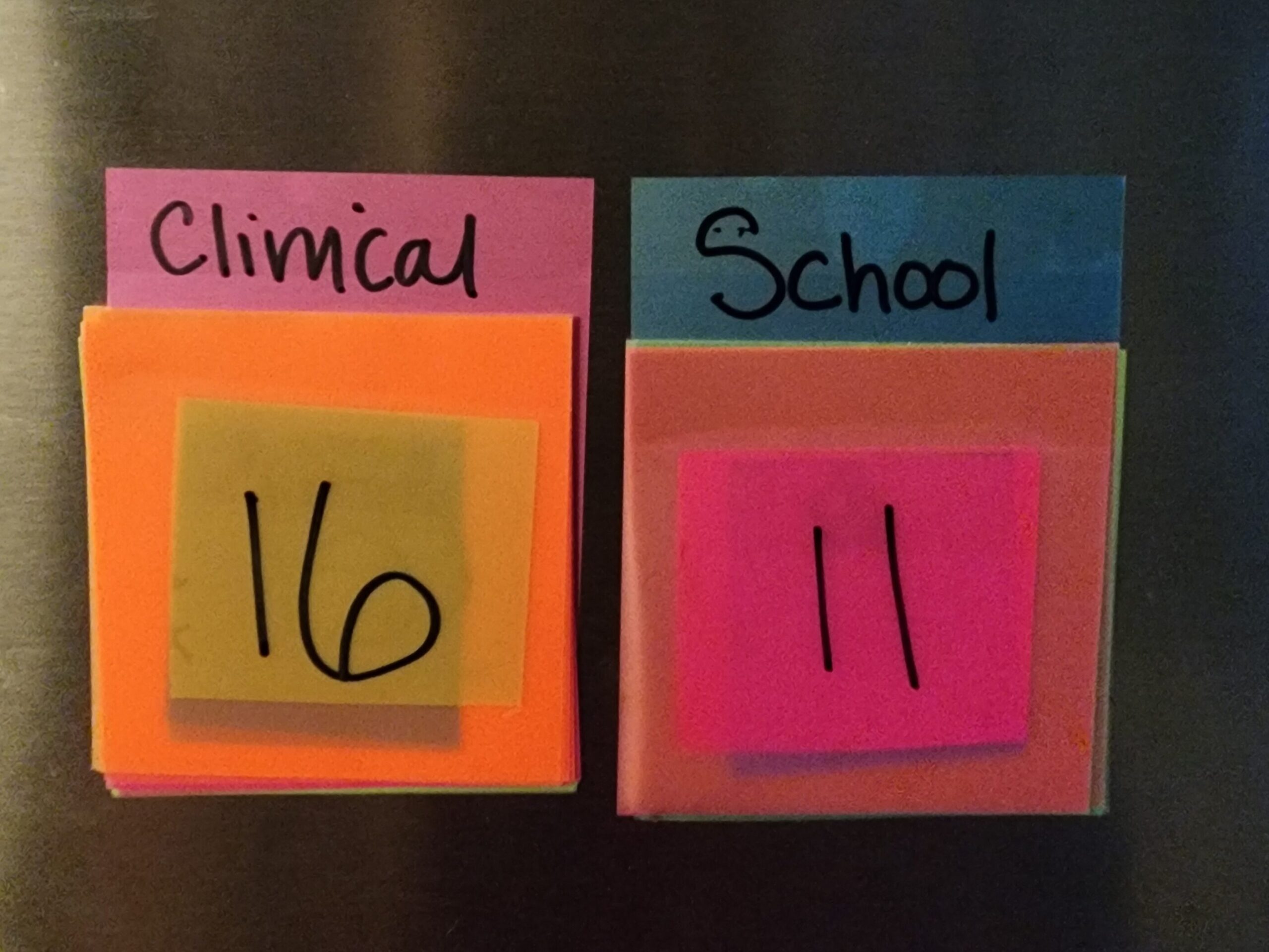
I knew there would be classes, exams, clinical rotations and boards. The program required roughly 1,700 clinical hours, and I could read that number on a page. What I couldn’t understand yet was what 1,700 clinical hours would feel like once they were dropped into the middle of my actual life.

The Finished Version Is Easy to Want
We want to be stronger. We want the successful business. We want to speak another language. We want to change careers or finish the degree. The finished version is easy to picture — what’s harder to picture is that the work has to fit into an ordinary week. It takes Tuesday evenings and Saturday mornings. It uses money that could have gone somewhere else. It competes with sleep, weekends, relationships and all the other things that already have a claim on us.
Eventually, pursuing a goal means deciding what we’re willing to rearrange to make room for it. School rearranged a lot in our house.
Someone Else May Pay Part of the Price
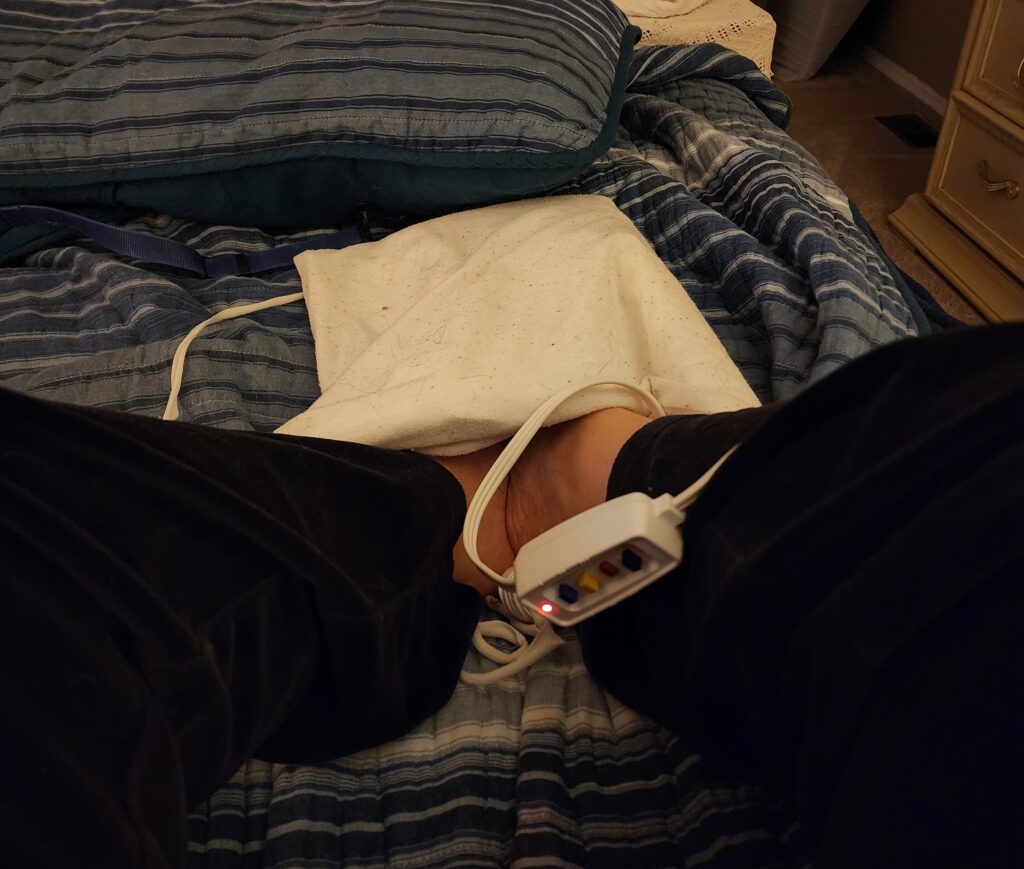
I was the one who went back to school, but I wasn’t the only person who gave something up for me to do it. Tom picked up things I couldn’t get to, and he had less time with me and considerably less of my attention. There were plenty of days when what he got at the end of a clinical shift was an exhausted wife with sore feet, a sore back, and material she still needed to study. He rubbed my feet, worked on my neck and back when they hurt, helped me study, and kept things moving when I didn’t have much left to give. He’ll tell you the foot rubs alone should count toward an honorary degree.
Andi and Sam had a mom whose schedule and attention had changed too. There simply wasn’t enough of me to spread around the way I had before. Some people outside our house understood that I had entered a demanding two-year stretch and expected less from me. Others were hurt that I wasn’t showing up the way I had before. My decision changed things for them even though they hadn’t made it.
We tend to talk about sacrifice as though it belongs entirely to the person pursuing the goal. That wasn’t how it worked in our house — I was earning the degree, but the people who loved me were giving up things too. Their part of the cost belonged in the calculation.
I’ve written before about what happens when we realize we’re living with choices we never really made, or ones that no longer fit. In Stop Living a Life You Never Actually Chose, I wrote about questioning some of mine. I had chosen school. Now I was finding out what that choice required.
The Work Gives You Better Information
A semester into the program, I knew far more than I had when I applied. I had been uncomfortable, embarrassed and inexperienced more times than I could count. I had learned in front of people who already knew what they were doing, taken correction, made mistakes, and gone back the next day. I also knew what the schedule did to our lives. The price was real by then, and I still wanted the career.
There were plenty of days when I was tired, sore, overwhelmed or thoroughly sick of being a student. I never reached the point where I wanted a different destination — I wanted to get through school and become a technologist. That became the more useful question for me: now that I understood more about what this required, did I still want it? My answer kept being yes.
Someone else might get far enough into a goal to answer differently. You can start with the best information you have and discover later that the reality no longer deserves what you’re giving it. The years, money or effort already spent don’t make another year automatically worthwhile. I wrote more about that in How to Know When It’s Time to Quit Something.
School was hard, and I was also still headed somewhere I wanted to go. Knowing the difference is what helped me keep going.
You Won’t Know Everything the Goal Will Give You
I got what I went back to school for. I became a radiologic technologist and found work that is physical, varied, interesting and centered around people. I like what I do. It gave me another way to contribute financially to our family and opened possibilities we hadn’t known were there when I applied.
But the job wasn’t the only thing I walked away with. Somewhere in those two years of being uncomfortable, corrected, and wrong in front of people who already knew what they were doing, I built a kind of confidence in myself that I hadn’t had before. I learned that I could do something difficult, be bad at it for a while, keep showing up, and eventually become good at it. I became more disciplined, but I also trusted myself more — I knew I could take correction, recover from mistakes, and keep going when something mattered to me.
That has followed me everywhere. I’m more willing to try things I don’t already know how to do, because I have a much better idea of what I’m capable of. I’m more adaptable too — I don’t need the entire plan before I begin, and when something doesn’t work, I change course instead of freezing. I started Handcrafted Adventure without knowing exactly how it would work. Tom and I take on house projects neither of us knows how to do. When we travel and something goes sideways, we figure it out. None of that would have looked the same to me before radiology school.
I have proof now that I can learn, struggle, adjust, keep going, and come out the other side capable of something I couldn’t do before — and once you’ve done that once, the next unfamiliar thing doesn’t look quite as impossible.
That’s a return I never could have included in my original calculation. When I applied to school, I thought I was choosing a new career. I had no idea how much I would grow while earning it, or how many other doors that growth might open.
So Is the Goal Worth Pursuing?
I think about the things I want differently now. I’d like Handcrafted Adventure to become a successful business. I’d love to speak another language. I want to travel. I want to be strong and healthy. Those finished versions are easy to want — a successful business also means spending years writing, publishing, learning, marketing and figuring out what works. Speaking another language requires a lot of time being someone who doesn’t speak it very well yet. Getting stronger means making room to exercise over and over again. All of that becomes part of the life I’m living while I work toward the outcome.
So when I find myself saying I want something, I try to picture an ordinary week with that choice in it: where the time comes from, what gets less of my money or energy or attention, and who else will feel the change. Once I picture that part too, I ask myself if I still want it. Sometimes the answer is no — something can sound wonderful and still ask for more than you want to give it. Sometimes the answer stays yes. Either way, you know a little more about what you’re actually choosing.
If there’s something you keep saying you want, take ten minutes this week and write down five things:
What I want: What is the actual outcome I keep imagining?
What pursuing it will require: What time, money, effort or learning can I already see?
What will receive less: If this gets more of me, where will that come from?
Who else will feel it: Who may need to adjust, help, wait or receive less of my attention while I pursue it?
Knowing that, is it still a yes?
You won’t have perfect information — none of us does when we begin something new. The point is to look beyond the picture at the end. You’re choosing some of the days that come before it too, and the calculation is never really complete, because you can’t yet know who you’ll become in the process of pursuing it.
Every Friday, I send one observation that didn’t make it onto the blog. If you’d like to be part of that conversation, I’d love to have you. Free. Subscribe →