
I didn’t lift weights until I was in my early 50s.
Not really. I’d done cardio on and off. I’d walked. I’d done yoga a few times. But actual strength training — picking up weights, building muscle deliberately — that wasn’t part of my life until five years ago.
I didn’t know what I was missing.
How We Started
Tom had spent years focused on running and biking. Cardio was his thing — he was good at it, he enjoyed it, and it kept him fit in the way cardio keeps you fit. But strength training wasn’t really part of his routine either, not since his Air Force days.
We started together. That matters, because starting something unfamiliar is easier when you’re not doing it alone.
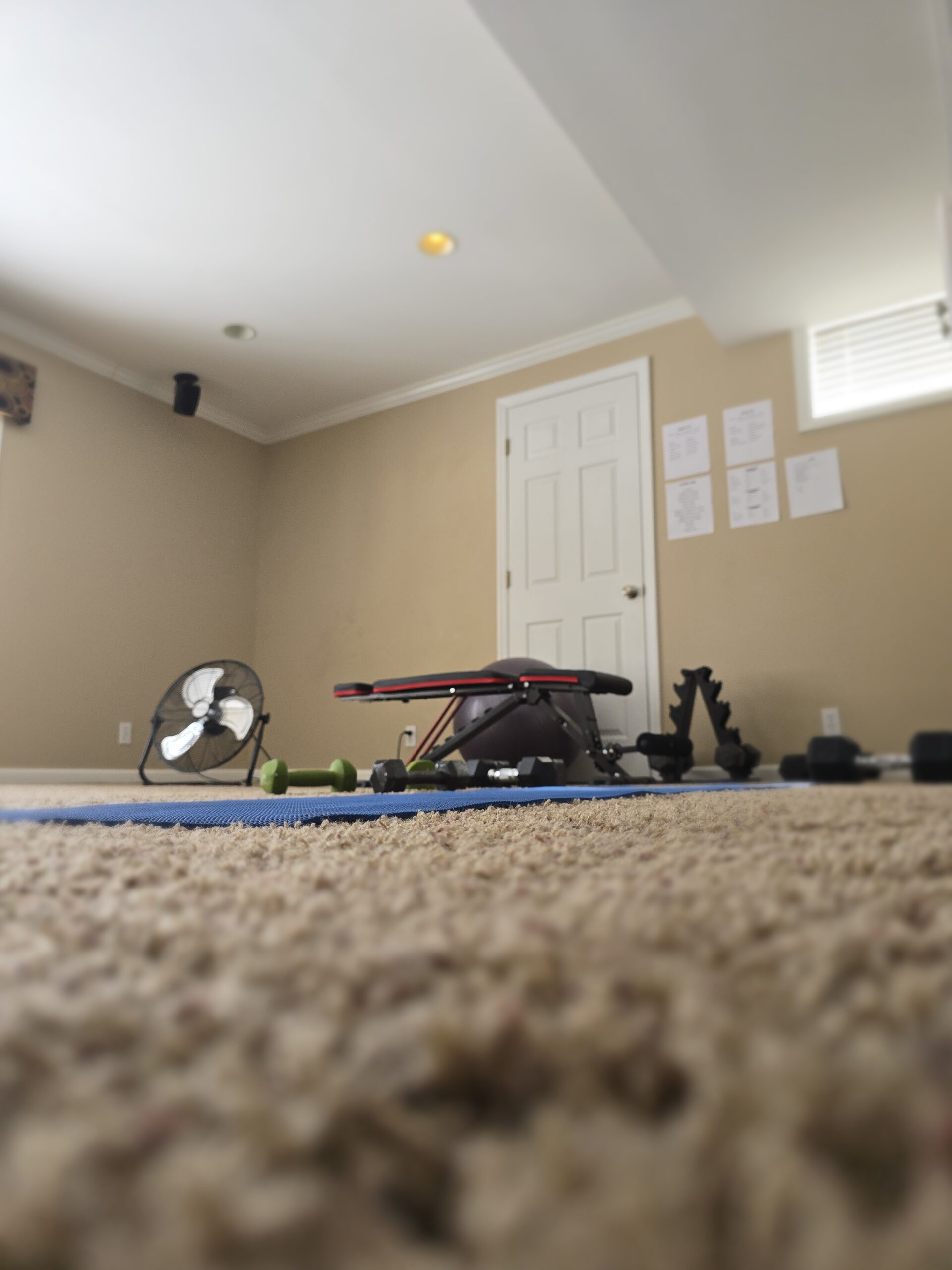
We found a structured program — Beachbody’s 21 Day Fix — that was accessible enough for two people who had never really lifted before. Nothing fancy. Dumbbells, a mat, a TV, thirty minutes. We were slow at first. The weights were light. We modified more than we didn’t.
But we showed up. And something started building.
What We Noticed
Within the first few months, something had shifted that neither of us expected.
We were noticeably stronger. Not dramatically — not in a way that was obvious to anyone else — but in the specific, physical way that you feel in your body when it can do things it couldn’t do before. The workouts that had been hard got manageable. The weights we’d started with felt light. We added more.
For Tom, coming from a cardio background, the difference was in what his body could do beyond the run. Strength added something that years of running hadn’t — a physical resilience, a capability in the upper body and core that changed how he moved through his days.
For me, the difference showed up at work.
What Strength Did at Work
I was a radiology student and then a working rad tech, and the job is more physical than most people realize.
Portable X-ray machines are heavy. You push them through hospitals, maneuver them around beds, position them in tight spaces. C-arms — the fluoroscopy equipment used in surgical suites — require repositioning constantly, sometimes quickly, in a room full of people and obstacles. Patient positioning requires lifting, supporting, guiding a body that may not be able to help you much.
Before I built any real strength, I got through those things. After, I did them differently. With less effort, less strain, more control. The difference wasn’t dramatic on any single day — it accumulated. Shift after shift, I had more left at the end of it.
That’s what strength training for everyday life actually means. Not a better gym performance. A better workday. A body that can do what your actual life asks of it without running out.
The Part About Muscle
I want to say something specific about building muscle, because it surprised me.
I assumed strength training would make me feel capable. I didn’t expect it to make me feel like myself.
There’s something about having muscle — about being able to feel your body doing something it chose to do — that changes your relationship with it. I’d spent decades in a body I managed. Exercise was something I started and stopped. My body was the thing that carried me around, and I didn’t think much about what it was capable of.
Building muscle changed that. Not because of how I looked. Because of how I felt — solid, capable, present in my body in a way I hadn’t been before.
I was in my early 50s. It took five years and a structured program and a lot of Tuesday mornings when I would have rather stayed in bed.
It was worth every one of them.
What Staying Strong Actually Looks Like Now
We don’t follow a program anymore. We’ve built enough of a foundation that we know what our bodies need and we can put together sessions that deliver it.
What we focus on is simple:
Strength work two to three times a week — squats, hinges, carries, rows, presses. The movements that translate directly to life: getting off the floor, picking things up safely, carrying things without strain, pushing and pulling without thinking about it.
Mobility alongside it — hips, spine, shoulders. Range of motion is use-it-or-lose-it, and losing it happens quietly. Five minutes a day is enough to maintain what you have.
Consistency over intensity. We are not trying to set records. We are trying to still be doing this in ten years, and in twenty. The version that runs at year ten is more valuable than the version that burns out at year two.
Where to Start
If you haven’t done much strength training — or if you tried it once and it didn’t stick — here’s what I’d tell you.
Find a structured program that meets you where you are. We used 21 Day Fix because it was accessible, time-efficient, and didn’t require a gym. That’s what worked for us. You might find something different works better — a personal trainer, a different program, a gym class. The specific program matters less than finding one you’ll actually do.
Start lighter than you think you need to. The goal in the first weeks is learning the movements and building the habit. The weight comes later.
Do it with someone if you can. Starting something unfamiliar is easier when you’re not alone. Tom and I started together and it made a difference — in accountability, in motivation, and honestly in the particular quality of doing hard things alongside someone you trust.
What This Is Actually For
Strength training isn’t about performance. It isn’t about how you look or what you can lift or hitting a milestone.
It’s about staying capable in your actual life. The hike that shouldn’t be a calculation. The move where you can carry your own boxes. The workday that ends with something left rather than nothing. The decade ahead where your body keeps up with what you want to do.
There’s also this: muscle mass is one of the strongest predictors of longevity we have. Not cardiovascular fitness alone — muscle. The research on this is consistent enough that it’s worth saying plainly: the strength work you do now is an investment in the decade ahead, and the decade after that.
We’re not training for a number. We’re training so our lives don’t quietly shrink because our bodies stopped keeping up.
That’s worth thirty minutes on a Tuesday morning.
Even the ones when you’d rather stay in bed.
For more on building the physical floor that makes everything else possible: Healthy Aging & Longevity: Proven Ways to Stay Active →
For the movement habit that started before the strength work: We Walked Most Days for Four Years →
The Weekly Reset lands every Friday morning — one grounded perspective, one small action. Subscribe here.
Disclaimer: This content is for educational and informational purposes only and is not intended as medical advice. Always consult a qualified healthcare professional before making changes to your exercise or health routine.