
There’s a version of healthy aging that’s mostly about subtraction.
Less sugar. Less sitting. Less of whatever you were doing before. The advice tends to arrive as a list of things to stop, alongside a list of habits you should have started ten years ago.
That isn’t the part that interests me most anymore.
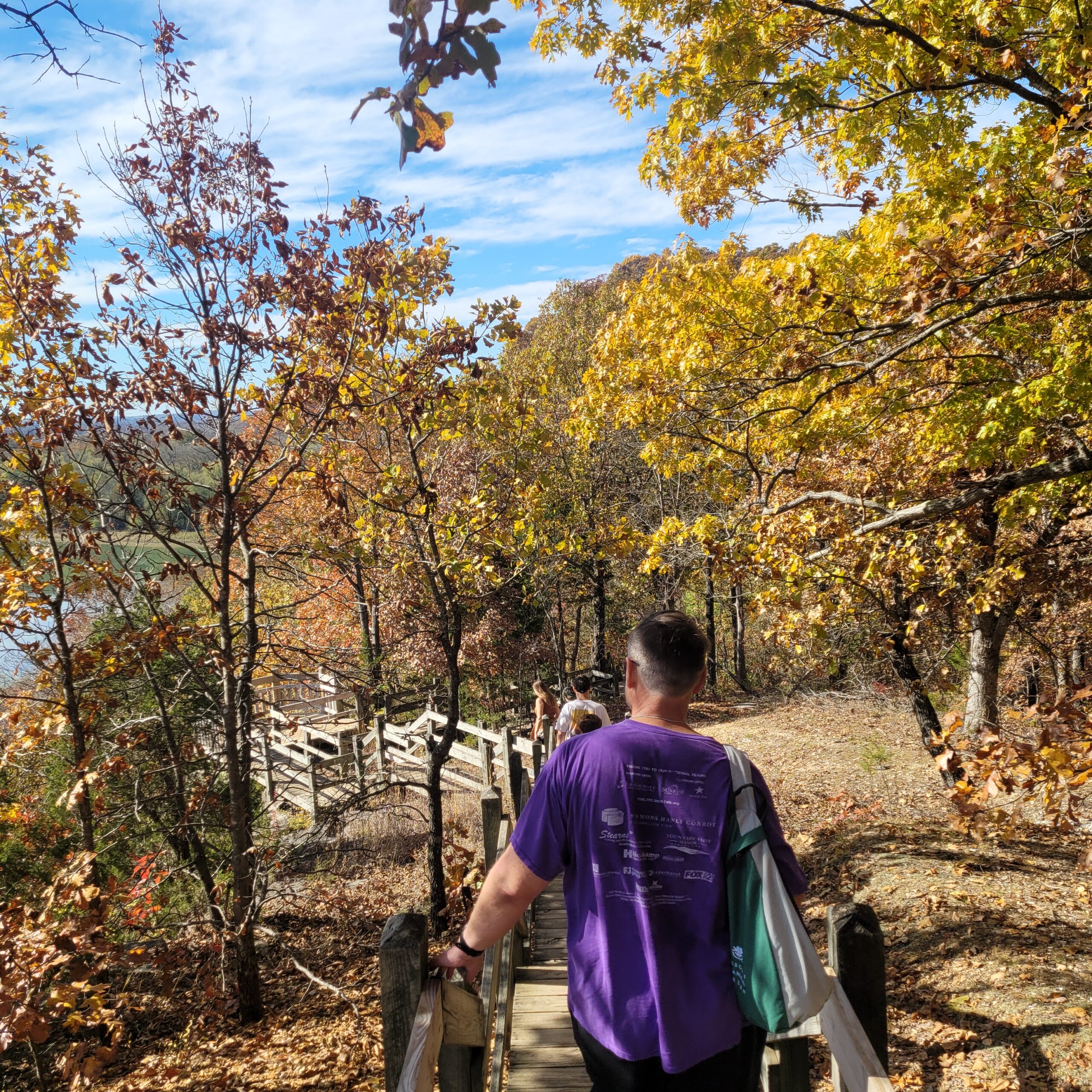
I care about whether my body will continue to let me do the things that make my life feel like mine. Can I walk the trail? Carry my own luggage? Spend a long day exploring somewhere new? Get down on the floor and back up? Work a physically demanding shift and still have enough left for the rest of my life?
That’s become my definition of healthy aging.
I want to stay in my life.
What I Mean by Staying in Your Life
Physical capability gives you access to things you rarely think about while they’re easy.
A flight of stairs is just a flight of stairs. A long walk through an airport is just how you get to the gate. You say yes to the hike without first calculating the distance. You make plans based on whether you want to do something rather than whether your body can handle it.
When those things become harder, life can start getting smaller in ways that aren’t immediately obvious.
I’ve watched some version of that happen from two very different directions.
Tom had both hips replaced in 2020 after living with increasing pain and physical limitation. I’ve watched him lose access to things, go through two surgeries and recoveries, and gradually get that access back.
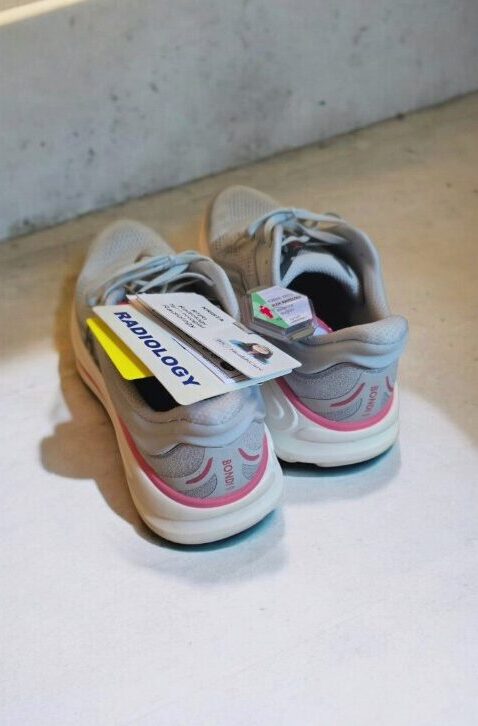
Then I went back to school to become a radiologic technologist and started seeing physical limitation from the other side of the X-ray table.
Those experiences changed the question for me. I’m considerably less interested in exercise for exercise’s sake than I am in what movement helps me continue to do.
What Working in Healthcare Changed for Me
Before radiology school, I already knew movement mattered.
Knowing something and seeing it repeatedly are different.
I’ve spent the past four years in clinical and working environments that include children’s and adult hospitals, inpatient care, outpatient care, operating rooms and orthopedic clinics. I see people on some of their best days and some of their worst ones. I see injuries, joint replacements, arthritis, fractures, pain, recovery and bodies that move through the world with wildly different levels of ease.
I also see how much physical capability affects ordinary life.
Can someone stand comfortably for the exam? Move from a wheelchair to the table? Raise an arm where I need it? Roll onto a side? Walk back out of the room?
As a technologist, my job isn’t to look at a patient’s images and decide how they lived or what caused what I’m seeing. There are far too many reasons a body can hurt or lose function for that.
But spending this much time around illness, injury and physical limitation has made me stop treating my own ability to move as something I can safely assume will always be there.
I want to take care of it while I have it.
Tom Taught Me Something Different About Access
Tom’s experience made this considerably less abstract.
Before his hip replacements, his world had been getting physically narrower. Things hurt. Movement was limited. Activities that once required no thought started requiring consideration.
After the second surgery, we began walking together as part of his recovery. At first it was half a mile, cul de sac to cul de sac. Eventually those walks became longer, and over the next several years regular movement became part of our lives.
I’ve told that story elsewhere because the walking itself became important to us. But in the context of healthy aging, what stays with me is what Tom regained.
Access.
He could do things again without his hips being the first consideration.
When you’ve watched somebody lose some of that freedom and then work to get it back, physical capability stops sounding like a fitness term. It becomes very practical.
That’s what I’m trying to protect.
Strength Matters Because Life Requires It
I didn’t start strength training because I wanted to become particularly good at strength training.
When I was preparing for radiology school in my 50s, I knew the clinical work would be physically demanding. I’d be on my feet for long shifts, moving equipment, positioning patients and working in environments where being physically capable would make my job easier.
So strength became practical. It still is.
I want to carry luggage. Haul mulch around the yard. Get up from the floor. Handle stairs. Hike. Move equipment at work. Keep doing the things I currently do without having to think very much about whether I’m strong enough to do them.
That changes the way I think about training. The workout isn’t the destination. It’s maintenance for everything outside the workout.
Mobility Matters for the Same Reason
Mobility is easy to ignore because losing it can happen gradually.
You compensate. You stop reaching quite as far. You choose a different way to get up. You avoid a position that feels uncomfortable. None of those individual changes necessarily feels significant.
That’s why I want mobility work in my life before I have an obvious reason to care about it.
For me, that means regularly moving my hips, ankles, shoulders and spine through comfortable ranges of motion and paying attention when something starts feeling different. It isn’t a separate athletic goal. It’s another part of keeping ordinary movement available.
Walking Still Does More Than I Give It Credit For
Walking was where most of this started for us, and it remains one of the simplest ways we keep movement in our lives.
It doesn’t replace strength work, and I don’t need it to.
Walking gets us outside. It gives Tom and me time together. It keeps the dogs moving. It gives my brain a break. It makes longer days on my feet feel normal rather than exceptional.
For several years we walked most days. When life changed and we stopped doing it as consistently, I noticed how much more than exercise had disappeared with it.
That’s its own story. The larger lesson here is that movement doesn’t have to accomplish everything to be worth doing. Different kinds of movement give us different things.
Recovery Belongs in the Picture Too
I’ve also had to get better at recognizing that maintaining capability isn’t the same thing as constantly demanding more from myself.
Sleep matters. Rest matters. Food matters. There are days when pushing harder is useful and days when backing off is the smarter choice.
That’s particularly important to me now because I’m not training for a six-week transformation or a finish line.
I’m trying to build a body I can live in for decades.
Anything I do for six weeks and abandon isn’t particularly useful for that goal. I need movement, strength and recovery that can coexist with work, travel, family, projects, bad weather, busy weeks and the rest of my actual life.
The Goal Is More Available Life
I don’t know exactly what my body will be capable of ten or twenty years from now. Nobody gets that guarantee.
Exercise doesn’t make us immune to illness, injury, arthritis, disability or aging. I’ve seen enough healthcare to know better than that.
What I can do is give myself something to work with.
I can keep walking. I can keep lifting things. I can work on mobility. I can recover. I can pay attention when something changes instead of assuming I’ll deal with it someday.
And I can remember why I’m doing any of it.
I don’t particularly care about being someone who exercises.
I care about being able to say yes.
Yes to the trip that involves a lot of walking. Yes to the trail. Yes to working in the yard all morning. Yes to carrying my own suitcase. Yes to getting on the floor with a kid or grandkid and getting back up again. Yes to an ordinary Tuesday that asks something physical of me.
That’s what healthy aging means to me now.
The exercise isn’t the life.
It helps keep the life available.
For the story of how walking became part of our lives — and what we discovered when we stopped doing it as consistently — read We’ve Walked Almost Every Day for Four Years. Here’s What It Actually Did.
Every Friday, I send one observation that didn’t make it onto the blog. If you’d like to be part of that conversation, I’d love to have you. Free. Subscribe →
Disclaimer: This content is for educational and informational purposes only and is not intended as medical advice. Always consult a qualified healthcare professional before making changes to your exercise, nutrition, or health routine.