

When I went back to school to become a radiologic technologist in my 50s, I had to get serious about my habits in a way I hadn’t before. Long shifts, constant movement, studying, clinicals — I couldn’t run on whatever energy happened to be available that day. I needed something more reliable than motivation.
Before school, life hadn’t been slow. We’d moved across the country when the kids were young, and the years that followed brought their own real weight — one of my sons needed a level of medical care that reshaped how we lived for a while, and both kids needed different things from me at different times. I was also looking after my father-in-law during that stretch, working on Four Robbins, and doing transcription work from home. There wasn’t a lot of open space in a day.
Food and television did a lot of the work I didn’t know how to do any other way — getting through my father’s death, then my stepdaughter’s, and a kind of background worry that never really turned off. That was hard too. Just a draining kind of hard, not a purposeful one. I wasn’t working toward anything. I was getting through my days.
School was hard with a purpose. I was tired because I was learning something difficult. I was stressed because I was trying to become competent at something completely new. And for the first time in a while, the effort was taking me somewhere I’d deliberately chosen to go. Working in healthcare also changed how I thought about taking care of myself — I was seeing illness, injury, and physical limitation up close while training for a job that was physically demanding in its own right. I didn’t just want to get through the program. I wanted to be strong enough for the work, and for the life I wanted outside of it.
So I built some structure around my days. Not a perfect one. A working one. And what I’ve learned since is that consistency has considerably less to do with executing that structure perfectly than I once thought. Eventually the structure breaks. What matters is what happens next.
The Week It Held
There are weeks when everything lines up — the schedule cooperates, the energy is there, the habits stack the way they’re supposed to. You work out when you planned to. You get enough sleep. The things that matter get done without much of a fight.
Those weeks feel good. They’re also not particularly revealing. It’s relatively easy to follow a plan when Tuesday looks the way you expected Tuesday to look. The more interesting week is the other one.
The Week It Didn’t
A PRN shift runs long. Something comes up at home. You sleep badly and you’re more tired than you expected to be by Wednesday, and the plan you made on Sunday barely resembles the week you’re actually living.
That’s where I used to get myself into trouble. Once the plan broke, I had a tendency to treat the whole thing as broken — I missed a workout, so apparently this wasn’t a workout week anymore. I ate something I hadn’t planned, so the eating plan was gone too. A couple of mornings went by without my normal routine, and it started to feel like I needed to wait for Monday and start the whole thing over properly.
Except nothing had actually disappeared. I’d missed something. That’s all. Missing one workout doesn’t erase the workouts that came before it. One unplanned meal doesn’t undo everything else you’ve been doing. A few mornings without your normal routine don’t mean you no longer have one. The problem was never really the miss — it was what I decided the miss meant.
Come Back Before It Becomes a Restart
This has probably been the biggest shift in how I think about consistency. I don’t want to keep starting over. I want to get better at coming back — sometimes that’s the next morning, sometimes it’s the next meal, sometimes it’s Tuesday afternoon when I expected the week to be going considerably better than it is. The return doesn’t need a Monday. It doesn’t need a new tracker or a few days of feeling guilty first. It can just be the next available decision. The shorter I make that gap, the less power one bad day has over everything that comes after it.
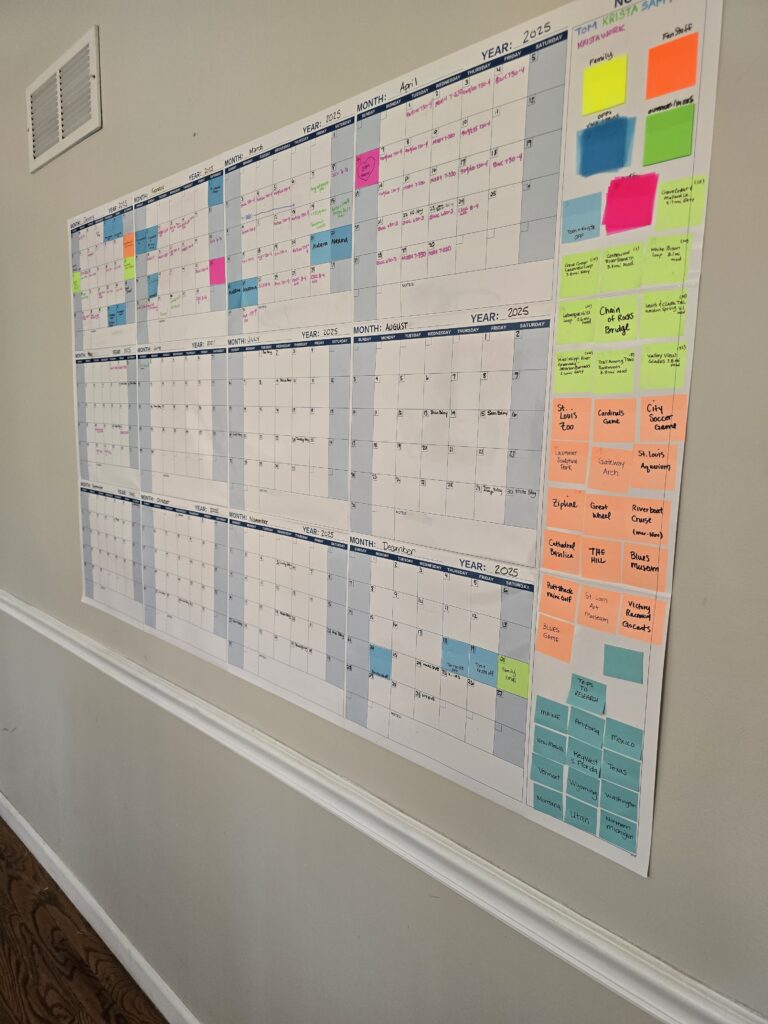
What Actually Helps the System Survive a Bad Week
A few things have made this easier. The first is putting the things that matter somewhere specific — “I’ll work out when I have time” leaves me negotiating with myself every single day, while a particular workout on a particular day gives it a place to live. That still doesn’t guarantee I’ll do it. It just means I’ve made the decision once instead of waiting to see whether I feel motivated when the time comes.
The second is letting the size of the effort change. A full workout when I have the capacity for one, something shorter when I don’t. There are times when rest really is the right call, and times when I can’t do what I’d planned but can still do something — I’ve had to learn the difference between those two.
And the third matters more than the other two combined: don’t make returning harder than leaving was. I don’t need to compensate for missing yesterday. I just need to decide what makes sense today.
A System Isn’t Supposed to Eliminate Real Life
I think this is where a lot of our expectations about consistency go wrong. We build a routine and then judge it by whether real life ever interferes with it — of course it does. Work changes, people need us, we travel, we get sick, we take on projects we didn’t plan for. A system that only works when none of that happens isn’t much of a system. The useful question was never Can I follow this perfectly? It’s Can I find my way back when I don’t?
I’ve also stopped treating every disrupted week as something to overcome and started treating it as information. If the same workout keeps getting skipped because I’m wiped out after a particular kind of workday, maybe that workout belongs somewhere else in the week. If the “short version” of something is still too much during my hardest weeks, maybe it isn’t actually the short version. The weeks when everything works show me what I’m capable of under good conditions. The weeks when it doesn’t show me whether I’ve built something that can survive my actual life. I need both.
From the outside, consistency can look like someone figured it out — they have a routine, they exercise, they eat a certain way, they get things done. Living inside it feels messier than that. It’s making the same decision over and over, sometimes easily and sometimes not. It’s changing the plan because Wednesday didn’t cooperate. It’s occasionally coming back to something on a Tuesday when you expected to be further along by then, and doing it again the next time life interrupts.
I used to think getting better at consistency meant getting better at preventing the interruptions. Now I think I’m just trying to get better at the return. The week the system holds tells me what’s working. The week it doesn’t tells me whether I know how to come back. Both count.
Every Friday, I send one observation that didn’t make it onto the blog. If you’d like to be part of that conversation, I’d love to have you. Free. Subscribe →