
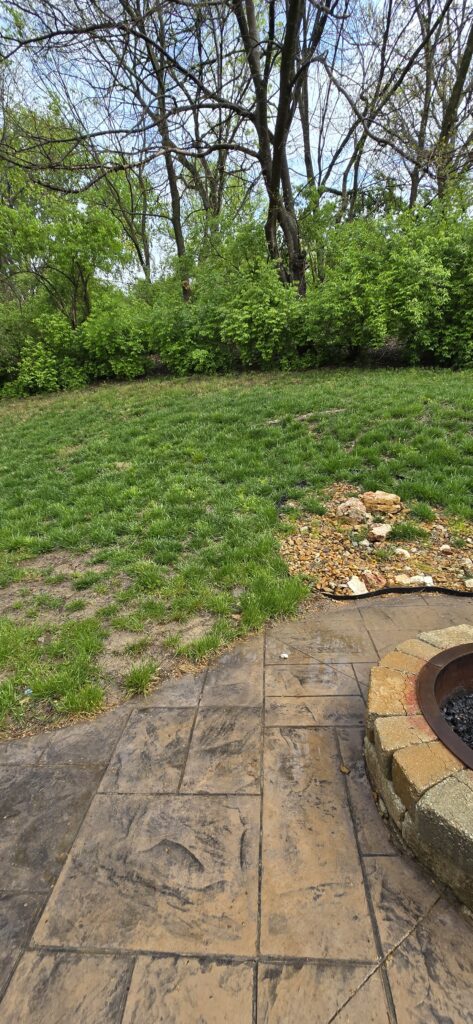
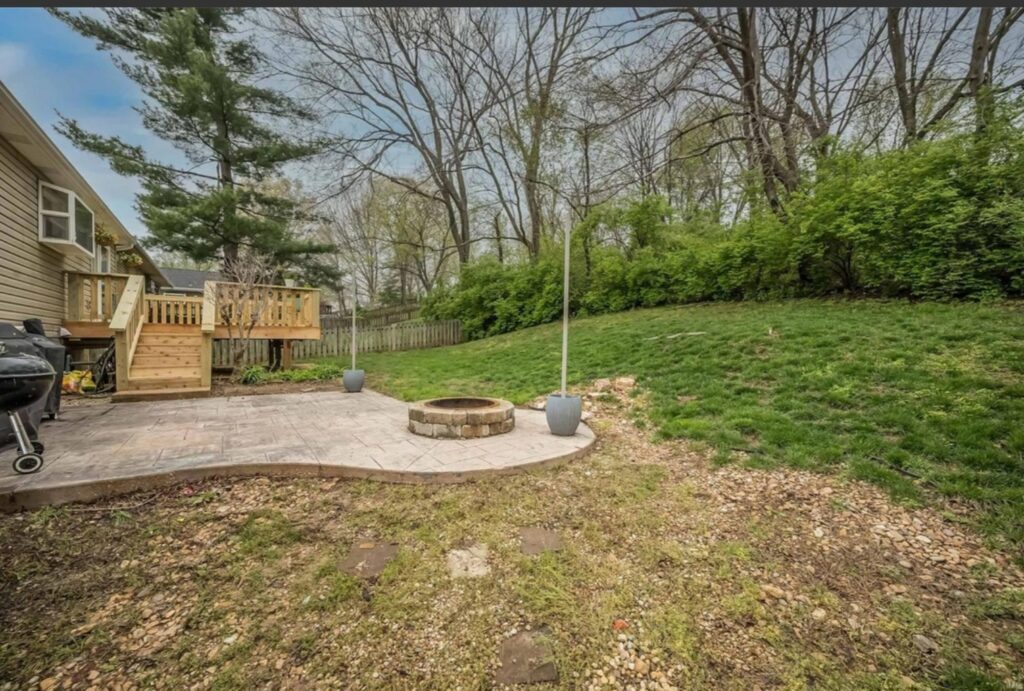
When we moved into this house last year, the back of the yard was basically a honeysuckle forest, a dense wall of green stretching across the hillside. We couldn’t even walk through it to get to the dogs if they wandered back there, and all that thick growth was ideal tick habitat. With two dogs running around the yard, it needed to go. So one of the first things we did was have it taken out, and suddenly we could see what we’d actually bought: a much bigger backyard than we’d realized, and a very large, very bare hillside.
We got a few landscaping quotes, and they were outrageous. We weren’t asking for anything elaborate, but even doing the bare minimum to deal with all that empty space was going to cost far more than we wanted to spend. So we decided we’d figure out what we could do ourselves. There was one problem: we aren’t gardeners. Before this, my gardening experience consisted of growing tomatoes, jalapeños, and herbs in pots. That’s it. I knew zero about landscaping. So we’ve been learning as we go.
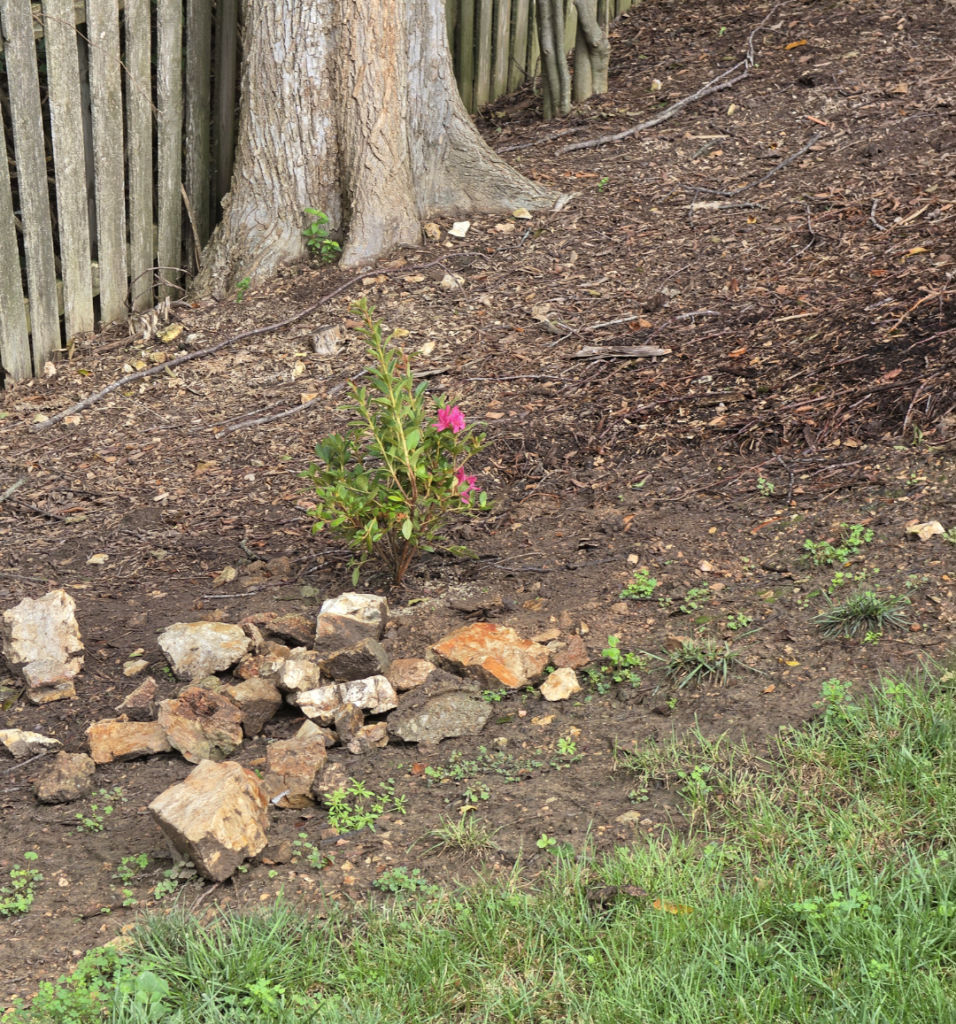
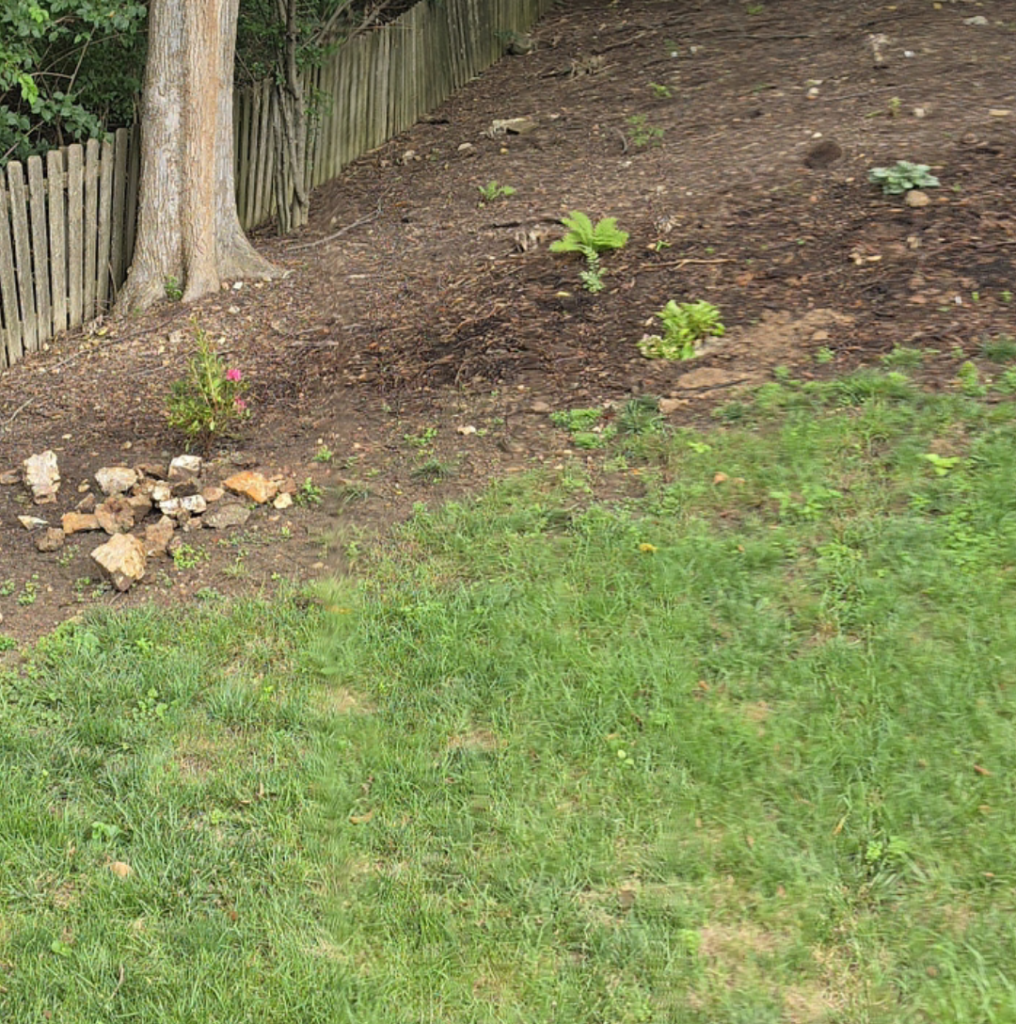
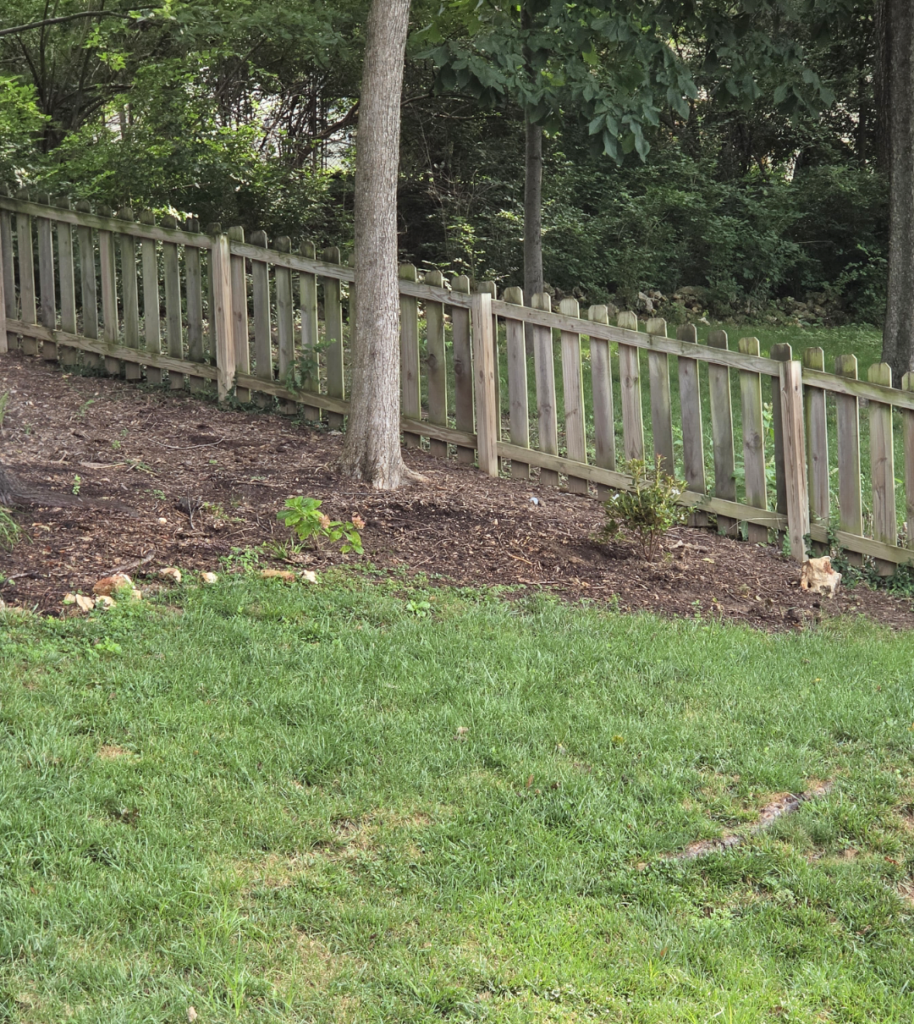
Last year, that meant buying some perennials and scattering them across the enormous hillside where the honeysuckle had been — ferns, astilbe, brunnera, and a few other things. There was a lot of empty ground, and putting plants throughout it seemed reasonable at the time. What we ended up with was a very large hillside with a few small plants scattered across it. This year I’m moving some of them forward. Instead of trying to fill the entire expanse, we’re concentrating on roughly the first quarter of it, letting the plants fill in and spread before we work our way back. It will take time, but it won’t cost a fortune.
Last year I thought the goal was to figure out the whole hillside. This year the goal is to get one section right and learn enough from it to make better decisions about the next one.
Fixing What Was Actually Bothering Us
The rest of the yard hasn’t followed a master plan either. Mostly, we’ve fixed things as they’ve bothered us.
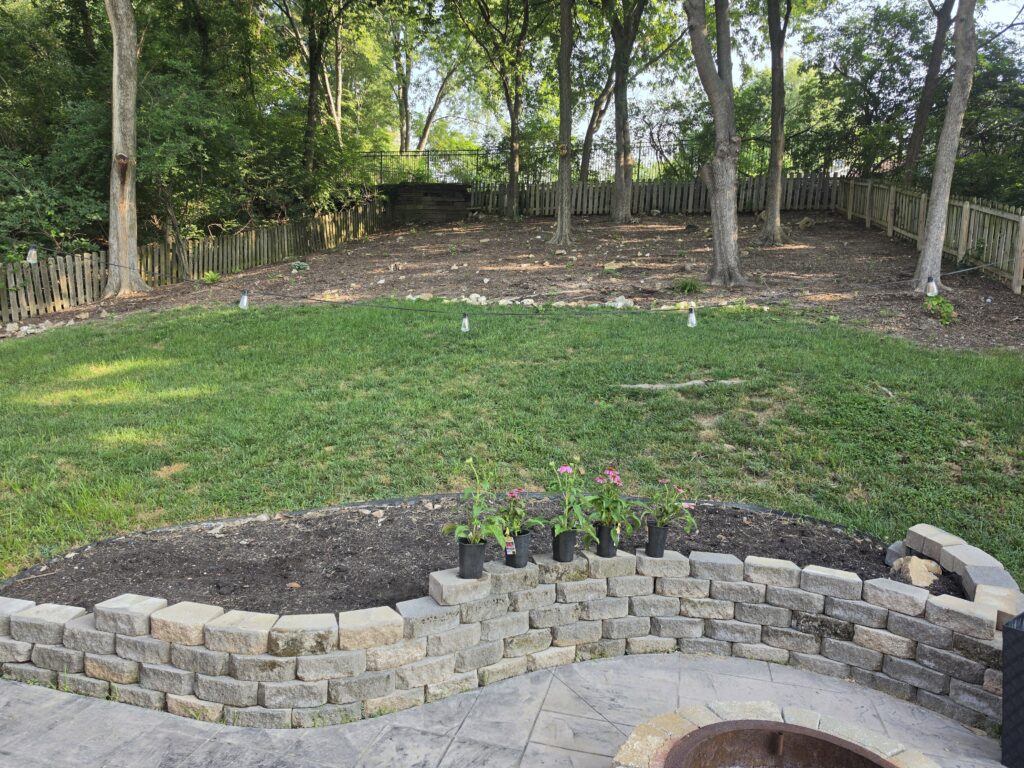
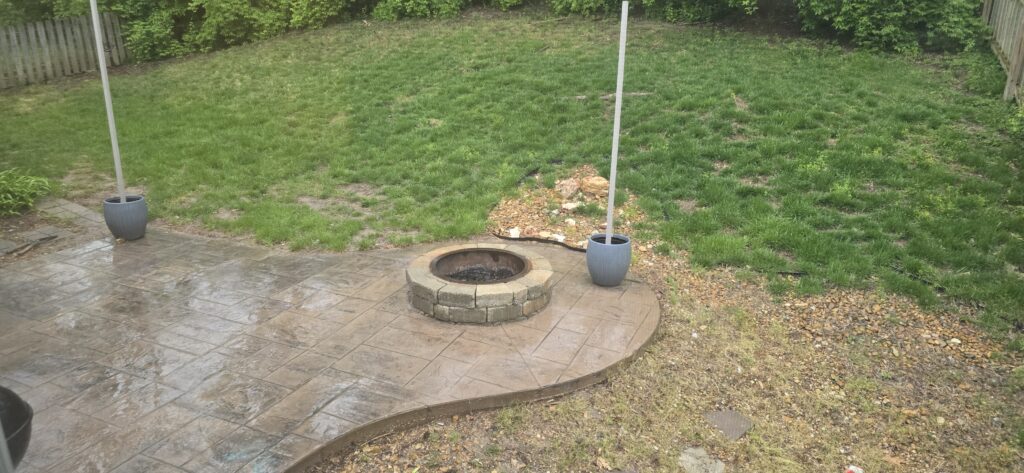
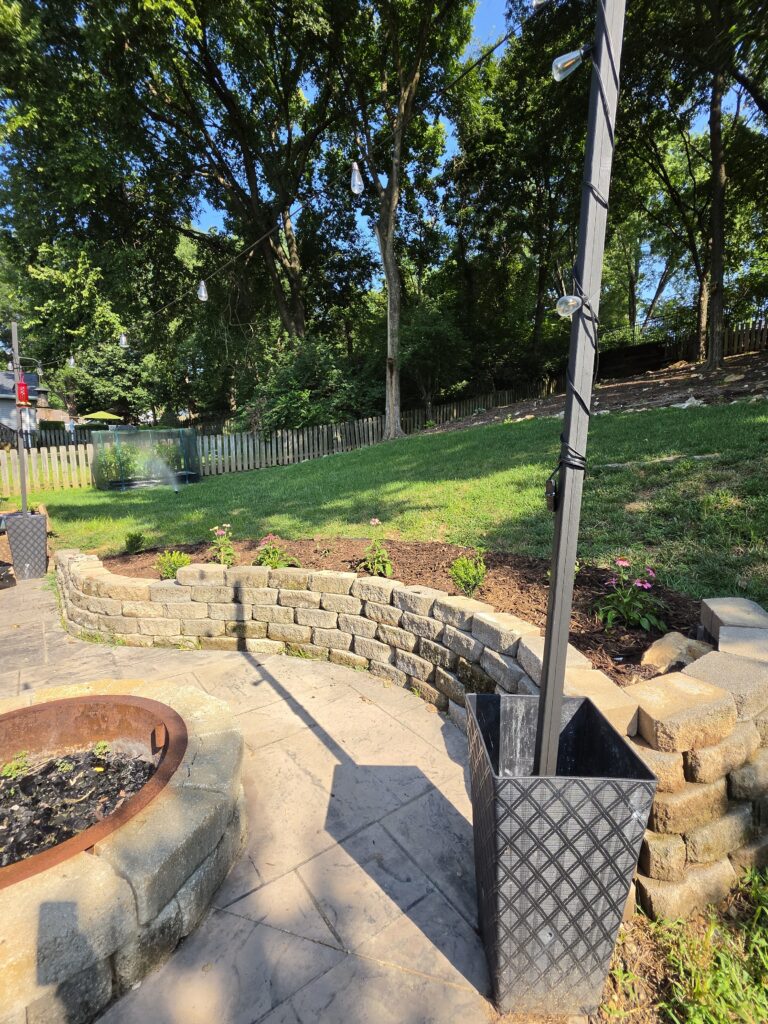
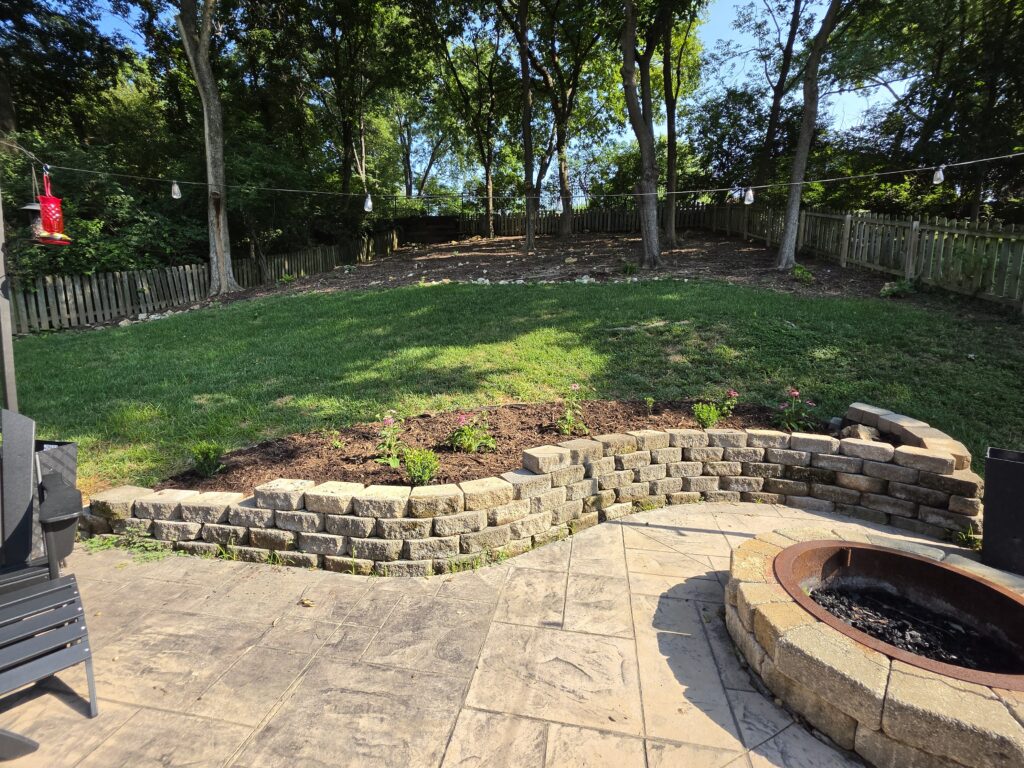
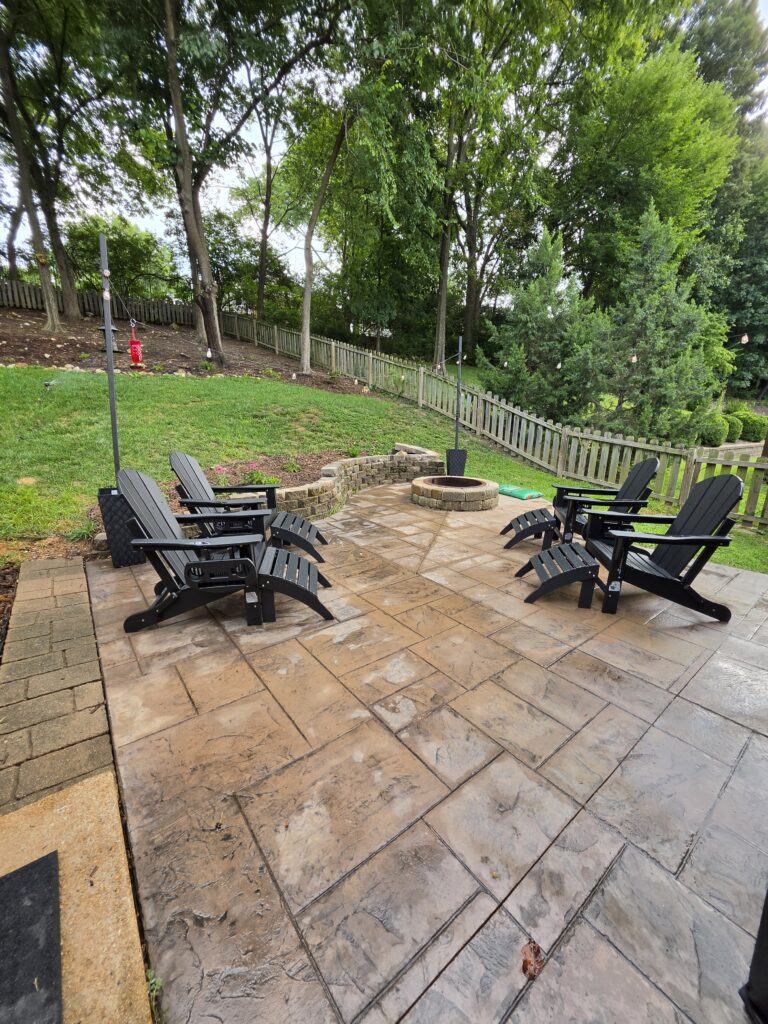
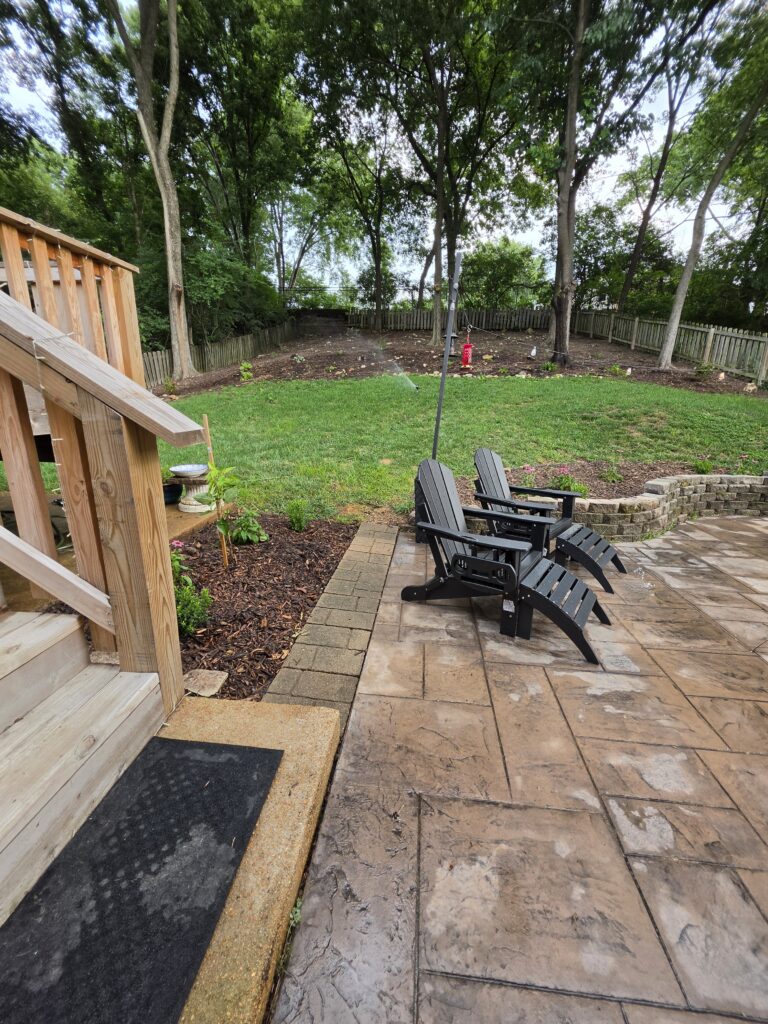
There was a rocky berm in the middle of the yard that didn’t look particularly good, and when it rained, water and mud washed toward the patio. Then we ended up with a bunch of pavers for free. Free pavers plus an ugly rocky berm plus a muddy patio eventually turned into: maybe we can build a wall here. So we did. We built the retaining wall ourselves and turned the area behind it into a garden bed.
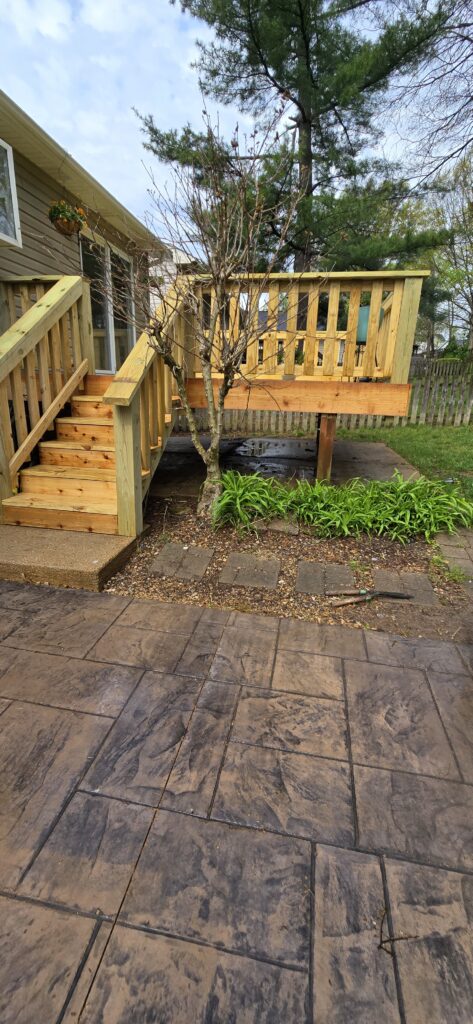
Then there was the bed beside the deck. It wasn’t part of any plan either. It had a Rose of Sharon that died over the winter and a mass of daylilies I didn’t particularly like, and it had been bothering me every time I looked at it. So I decided to dig everything out and start over. That sounded considerably easier than it’s turned out to be. Pretty much everywhere we’ve put a shovel into this yard, we’ve found something — rocks, roots, landscape netting, more rocks, and random things buried under the dirt. Very little about this has been easy digging. And because we’re learning while we’re doing it, there have been plenty of times when I’ve planted something, looked at it, learned a little more, and realized it probably belongs somewhere else. So I move it.
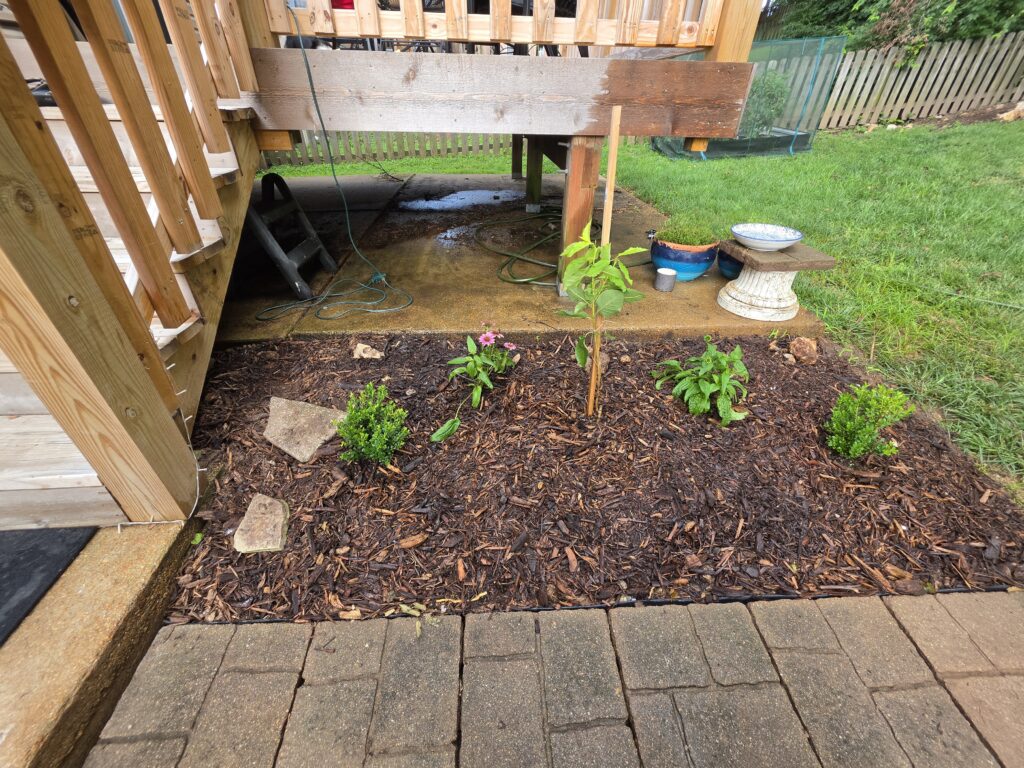
That’s probably obvious to someone who knows what they’re doing. It wasn’t obvious to me. I thought getting it wrong meant I’d made a mistake. Now I mostly see it as information.
I’m learning how big plants actually get, how far apart they need to be, which ones want more sun and which ones don’t, where water sits and where the ground dries quickly. I’m learning that a plant that looks tiny and lonely today may need all that empty space around it two years from now. And I’m learning that you don’t have to fill every bare spot immediately — that’s probably been the biggest change from last year. When the honeysuckle came out, I looked at that enormous empty hillside and wanted to make it look finished. Now I don’t. I want the first section to look good, and then we’ll work on the next one. The ferns can spread, the shrubs can grow, and we can propagate what we have, find plants on clearance, and add to it a little at a time while we keep learning.
Last year, all that bare ground looked like a problem to solve. Now I can look at it and know we just haven’t gotten there yet.
There are already places in this yard that look completely different from when we moved in. The honeysuckle forest is gone, and we can use the whole backyard now. There’s a wall where there used to be an awkward rocky berm, and a garden bed where water and mud used to wash toward the patio. The bed beside the deck is becoming something new.
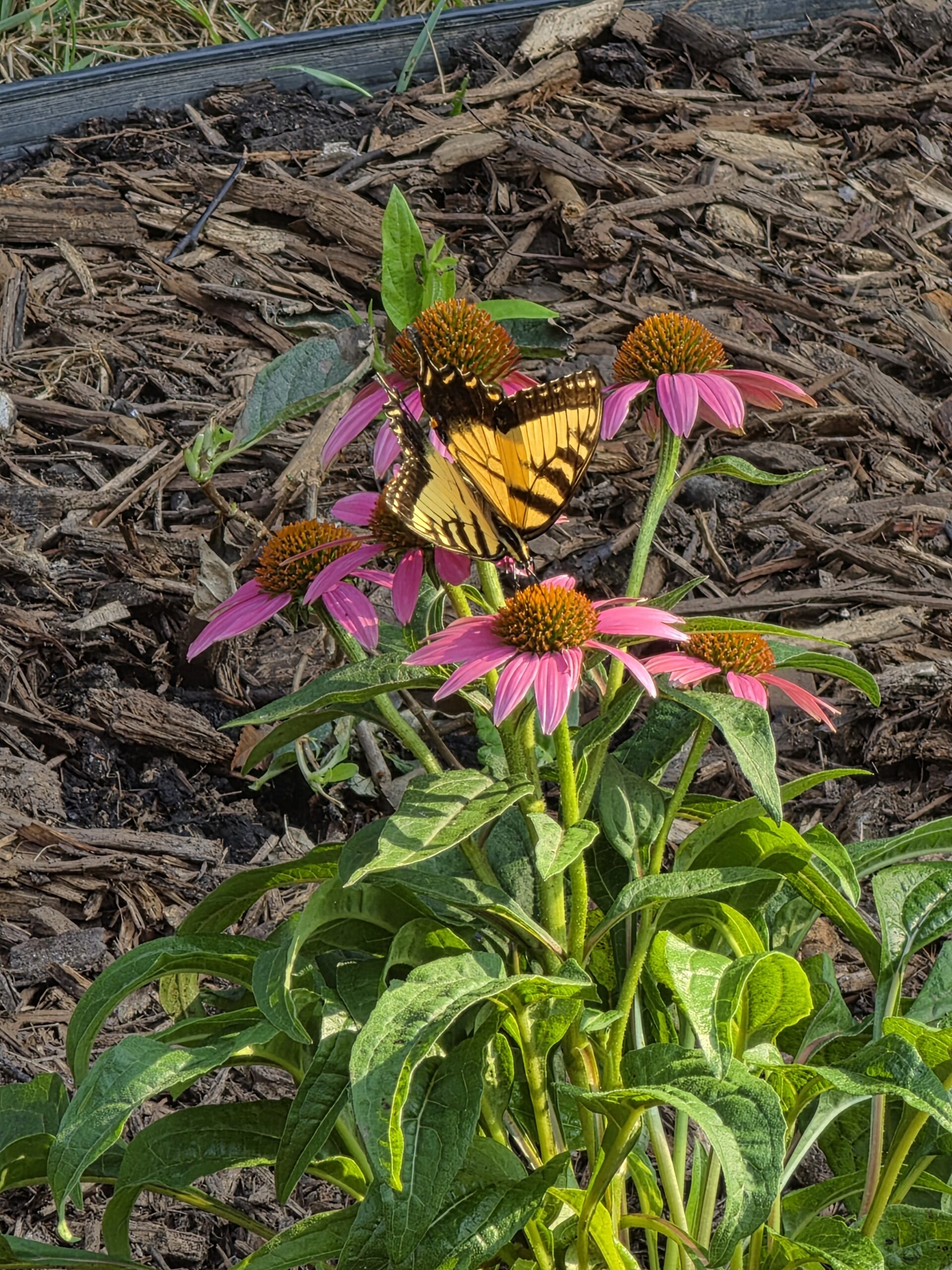
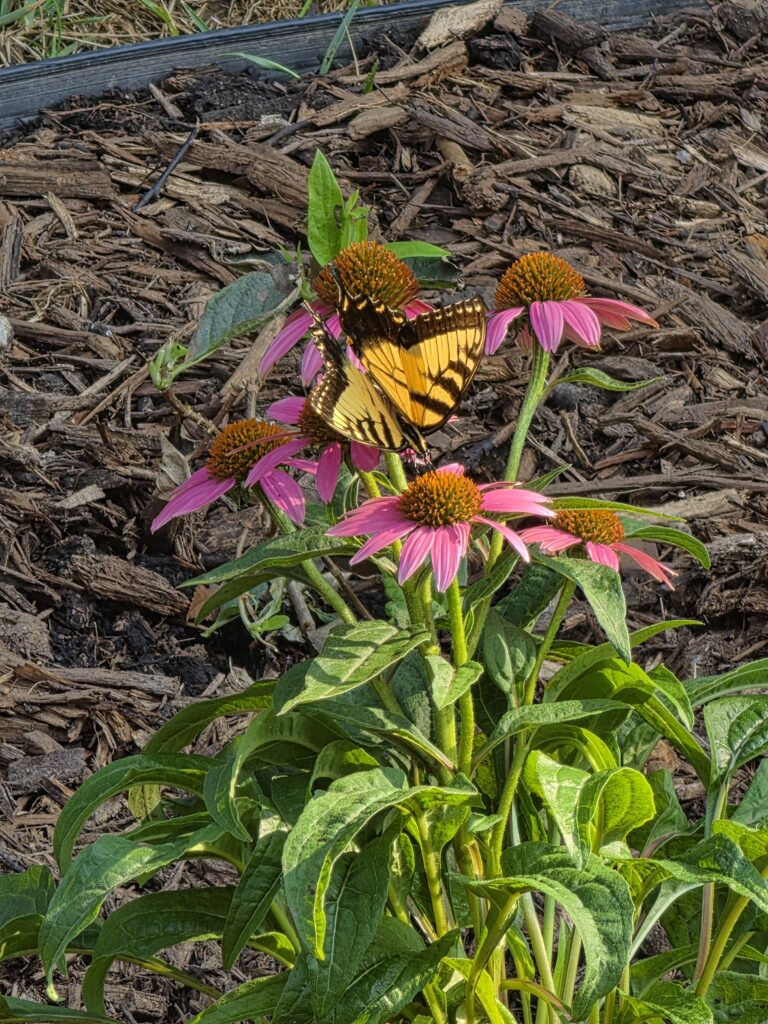
And this week, a swallowtail butterfly landed on one of the coneflowers we planted.
I knew zero about gardening when we started, and I still have a lot to learn. But maybe that’s one of the best things about doing it this way. We’re not simply paying someone to hand us a finished yard — we’re getting to know it, one shovel full of rocks at a time.
A year from now it will look different again. Five years from now, probably completely different.
For now, I’m working on the first quarter of the hill. I’m moving the plants that are in the wrong places. I’m watching where the water goes. I’m waiting to see what spreads next spring.
Then we’ll figure out the next part. Turns out that’s enough of a plan.
What’s something you started without really knowing what you were doing?
Every Friday, one thing we noticed, tried, or figured out — plus one small way to approach the week differently.