
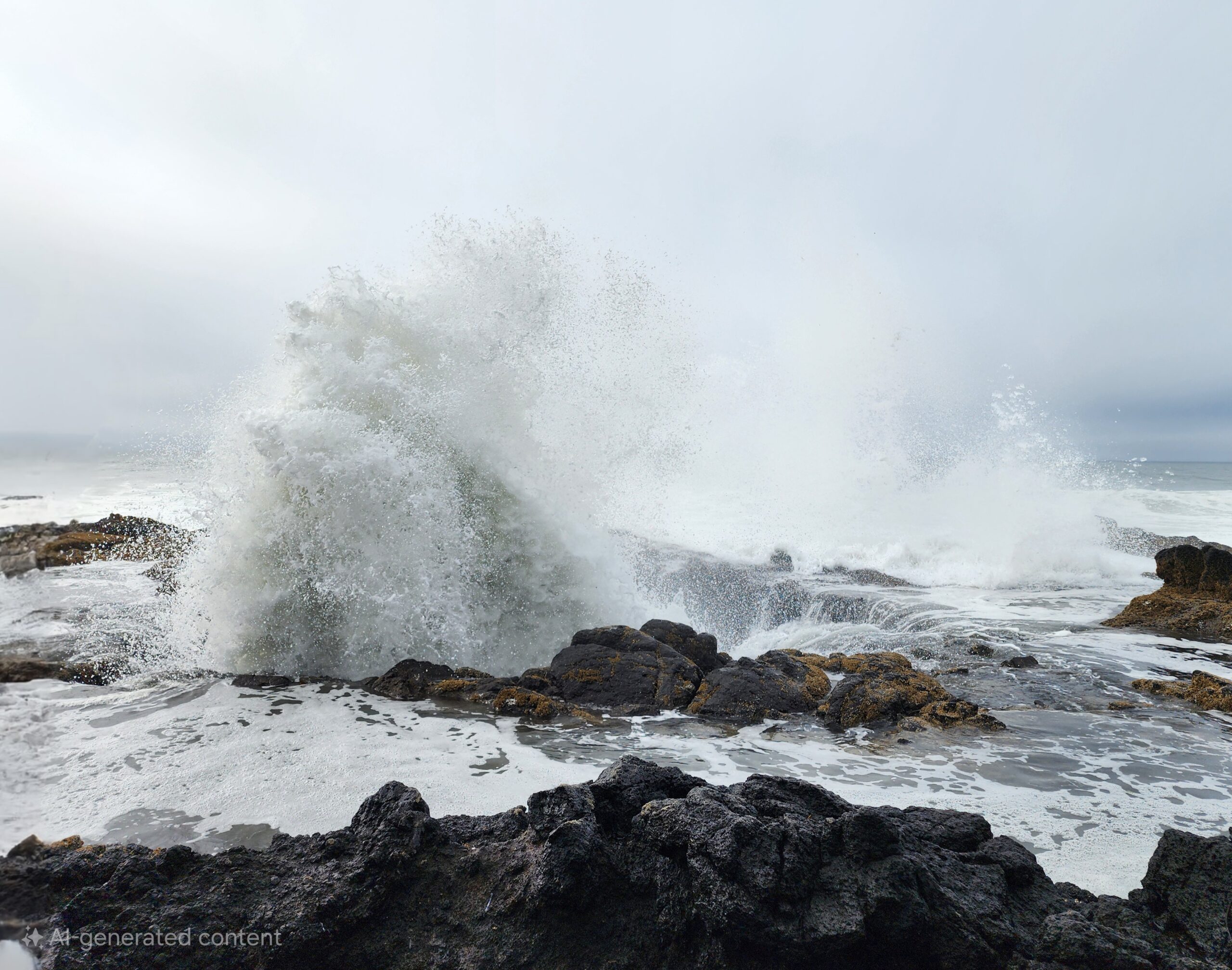
Thor’s Well was one of those Oregon Coast stops I’d seen in photos long before we actually went.
And it’s much easier to understand once you’re standing there.
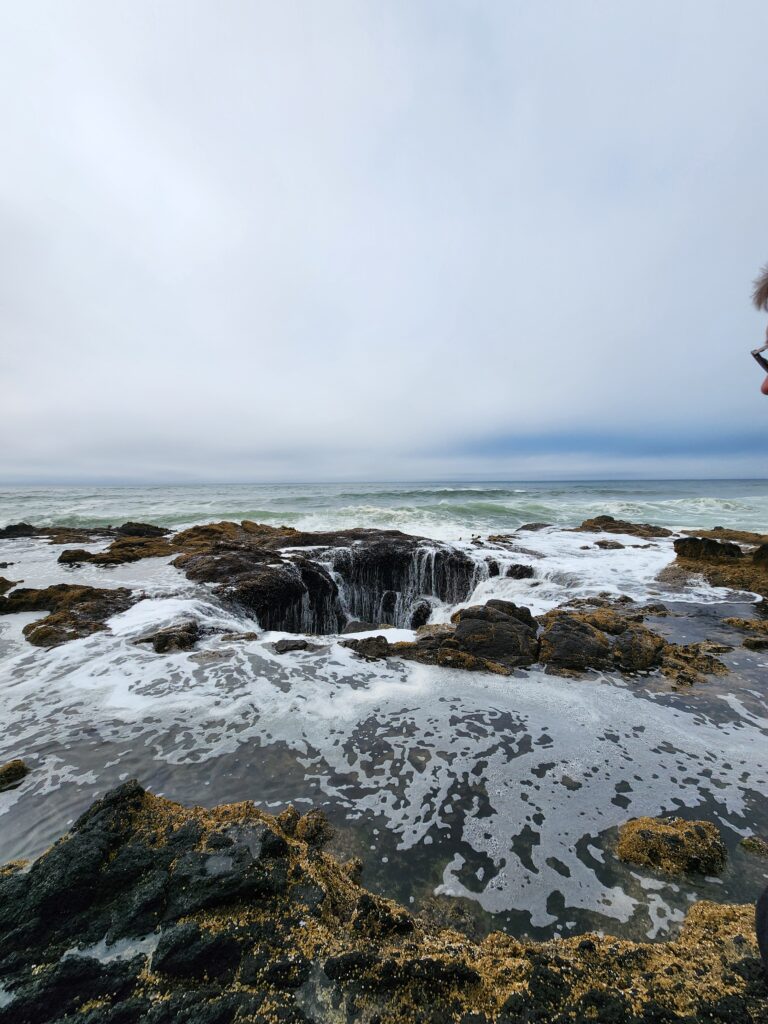
It’s not a giant hole in the ocean, even though photographs can make it look that way. Water rushes into an opening in the volcanic rock and then surges back out as the waves come in. From the right angle, it looks like the Pacific is disappearing straight into the ground.
We stopped while exploring the Cape Perpetua area, and this is one place where timing really matters. The tide changes what you’ll see, and the same water that makes Thor’s Well so spectacular is also what makes getting too close a very bad idea.
If you’re adding Thor’s Well to an Oregon Coast trip, here’s what I’d want to know before going.
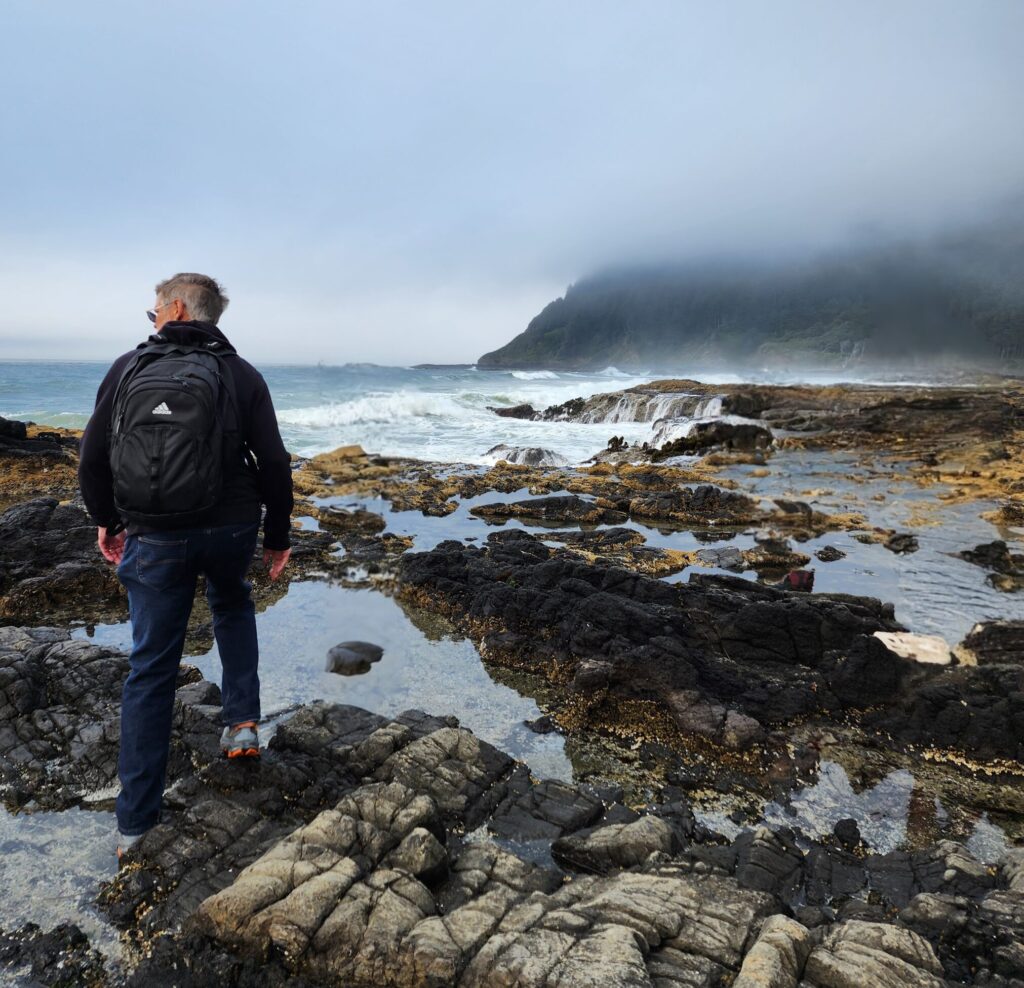
What is Thor’s Well?
Thor’s Well is an opening in the volcanic rock along the coast near Cape Perpetua. As waves move in, water fills the opening and can surge upward before draining back down again.
The effect changes dramatically with the tide and ocean conditions, which is why photos of the same place can look completely different depending on when they were taken.
How to Get to Thor’s Well
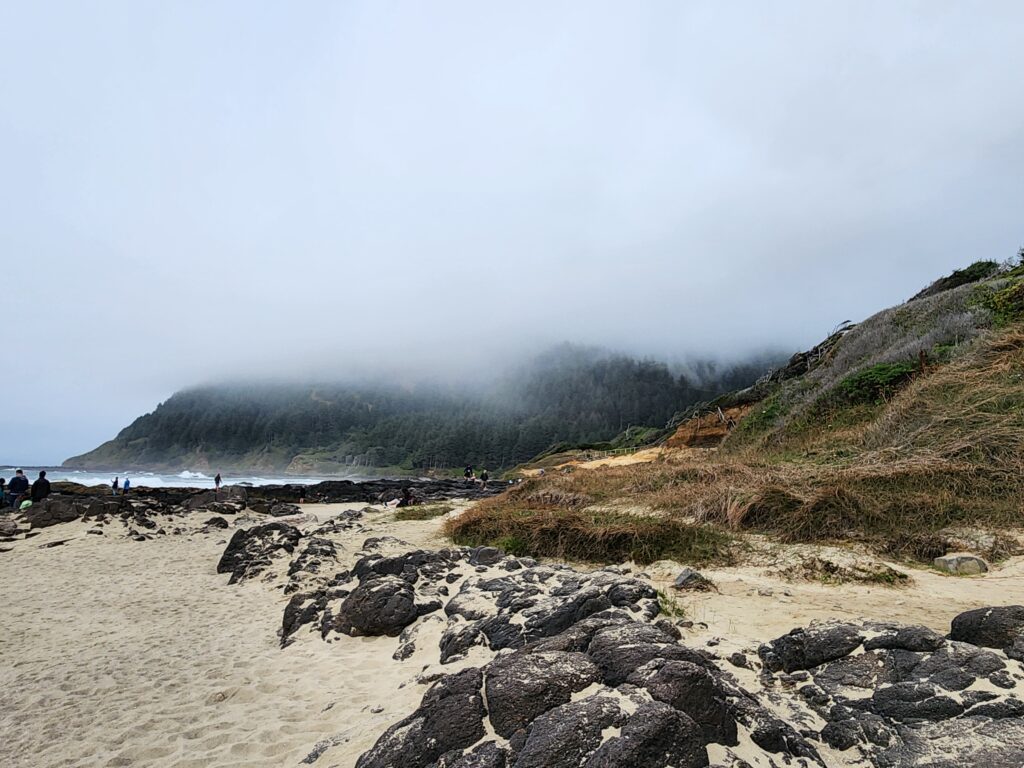
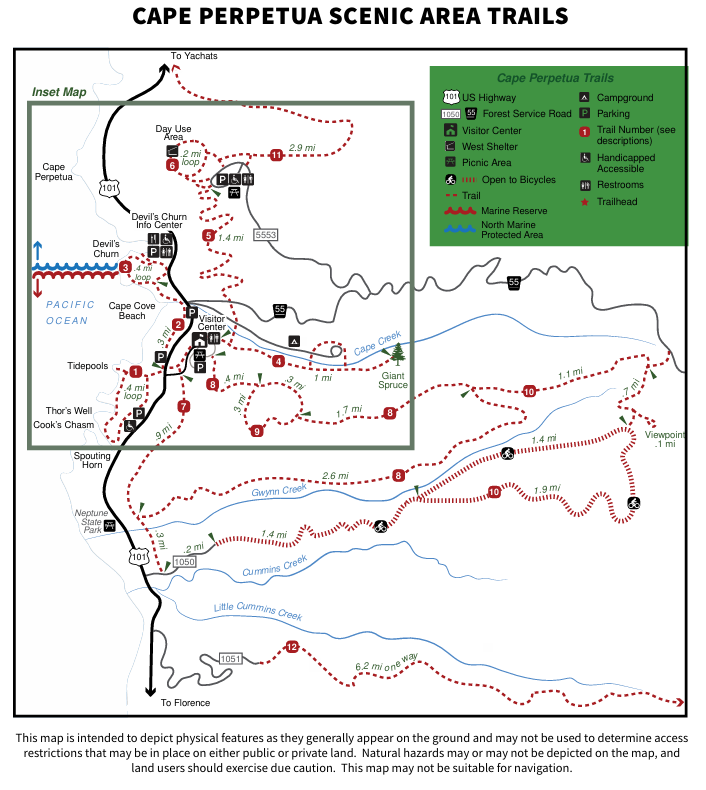
Thor’s Well is located within the Cape Perpetua Scenic Area, about two miles south of Yachats, Oregon, along Highway 101. There are parking areas and trails in the Cape Perpetua area that provide access to the Thor’s Well area. Check the Forest Service’s Cape Perpetua page for current maps and conditions before you go, since access and trail conditions can change.
If the main lot is full, there are pullouts along Highway 101 nearby, though you’ll have a slightly longer walk from there.
Check the Tide Before You Go
Thor’s Well looks different depending on the tide and ocean conditions, so check both before you leave.
More water movement can make the well more dramatic, but it also makes the surrounding area more dangerous. Don’t choose where to stand based on getting the best photograph. Stay well back from the water, watch the ocean continuously, and follow any posted warnings or closures.
Wear sturdy, non-slip shoes — the rocks are uneven and often wet. If conditions don’t look safe when you arrive, enjoy the coast from farther back. Thor’s Well isn’t worth getting hurt for.
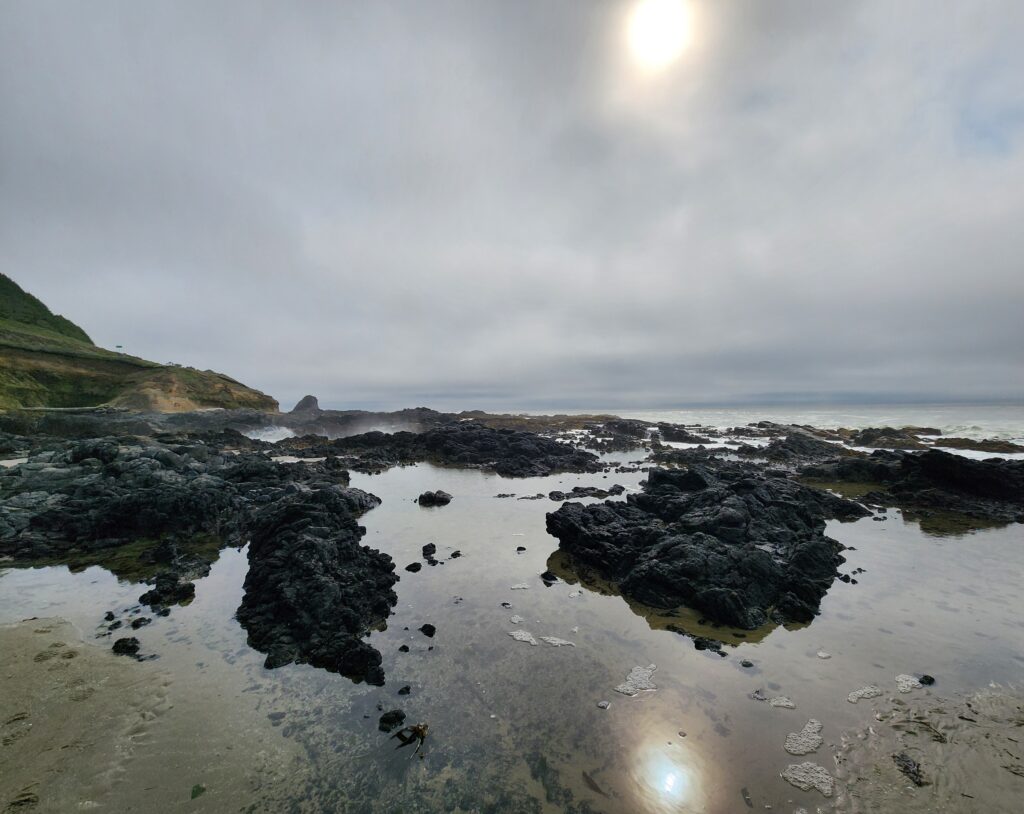
Don’t Make Thor’s Well Your Only Stop
Thor’s Well doesn’t need an entire day. That’s actually part of what makes it such a good Oregon Coast stop — there’s plenty nearby.
If you’re already there, give yourself time for more of Cape Perpetua:
Yachats — worth a stop for a meal or coffee while you’re in the area.
Devil’s Churn — a short drive away, where waves crash into a narrow rocky inlet with a lot of noise and spray.
Cape Perpetua Scenic Overlook — drive up for a completely different view of the coastline from above.
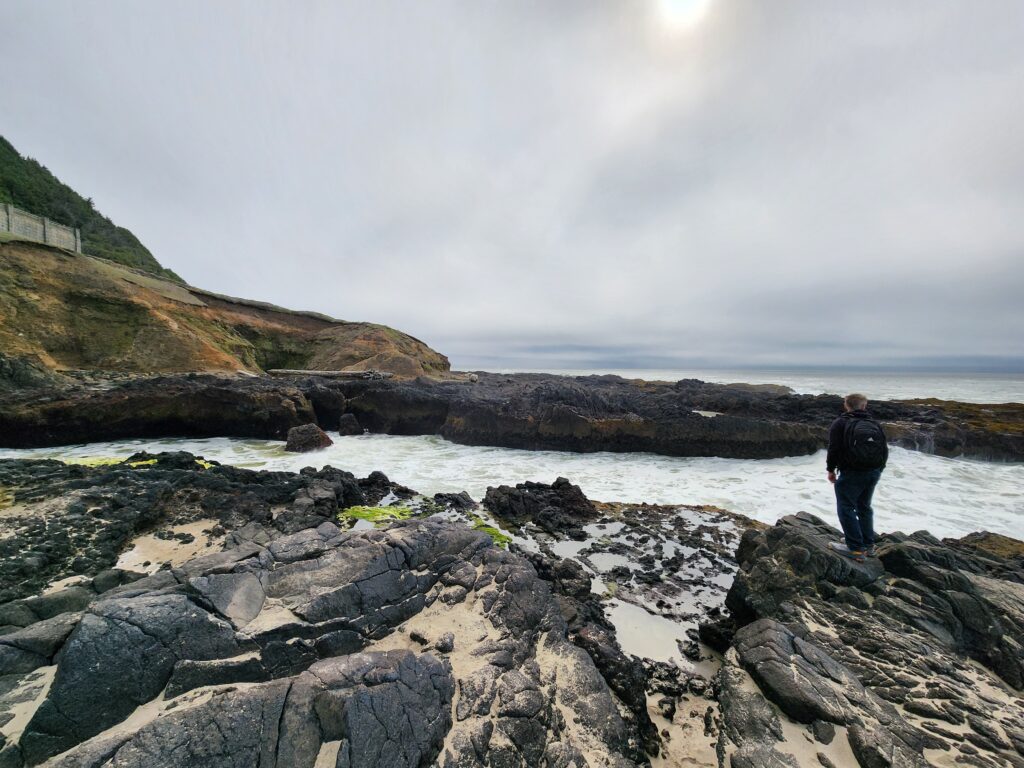
Our Thor’s Well Photos
We took the photos featured in our Thor’s Well collection during this trip to the Oregon Coast. A few of our favorites are available on mugs if you’d like to see the collection.
See the Thor’s Well Collection →
Accessibility at Thor’s Well
The closest viewing areas around Thor’s Well involve uneven, rocky terrain that may be wet and slippery. If that’s not workable for you, check the current accessibility information for Cape Perpetua before your visit and look for viewpoints that don’t require walking onto the rocky shoreline.
Conditions can change, so verify current trail and accessibility information before you go.
Before You Go
Thor’s Well is a relatively small stop on a much bigger stretch of spectacular Oregon coastline. Check the conditions, give the ocean plenty of room, and leave enough time to explore the rest of Cape Perpetua while you’re there.
And don’t get so focused on Thor’s Well that you forget to turn around and look at the rest of the coast. It’s pretty spectacular too.
If you’re building out an Oregon Coast trip, Cannon Beach is another stop from the same trip worth adding to the list.
Every Friday, one thing we noticed, tried, or figured out — plus one small way to approach the week differently.
Disclaimer: These travel guides are based on our own trips and preferences. Conditions, regulations, and access can change, so verify details before you go — and always use your best judgment, especially around water and rocky terrain.