

Sometimes nothing is actually wrong.
You have a job. A home. People you love. A life that works reasonably well. And still, somewhere in the middle of all of it, you start thinking: I don’t want the next five or ten years to look exactly like this.
That’s a strange place to be, because it’s much easier to justify change when something is obviously broken. When life is fine, wanting something different can feel unnecessary, selfish, or risky. So you wait.
You tell yourself you’ll figure it out eventually. You’ll make the change when you’re more certain. When you know exactly what you want. When the timing is better.
The problem is that five years can pass that way.
I’ve learned that most changes in my life didn’t start because I finally figured everything out. They started because I made one decision and learned something from it. It begins with paying attention to the life you’re already living.

You Don’t Have to Blow Up Your Life to Change It
When people talk about reinvention, it can sound dramatic.
Quit the job. Move across the country. Start the business. Become a completely different person. That wasn’t how it happened for me.
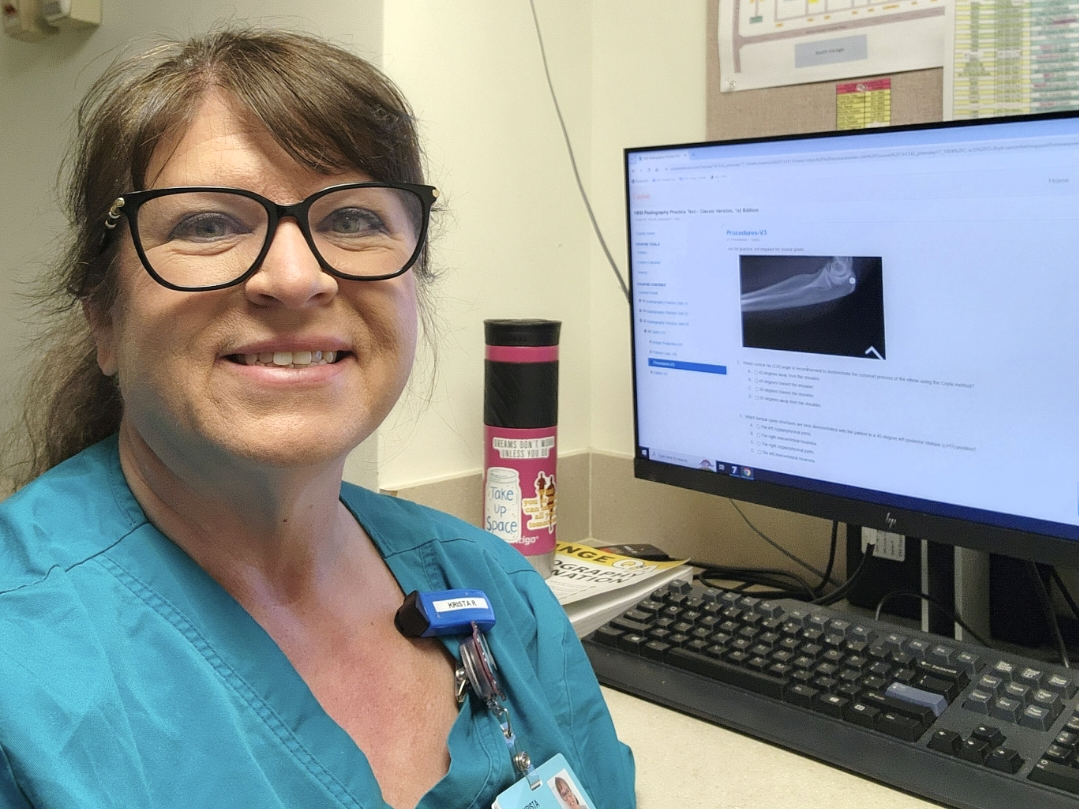
I went back to school in my 50s and became a radiologic technologist. I’ve changed the way I approach my health. Tom and I have become much more deliberate about travel, adventure, work, money, and what we actually want our lives to look like.
Those changes have added up to a very different life. But there was never one giant reinvention. There were decisions. And before most of those decisions, there was uncertainty.
That’s important, because I think we give certainty far too much power.
Stop Waiting Until You Know Exactly What You Want
One of the easiest ways to stay exactly where you are is to believe you need to know where you’re going before you begin. You don’t.
You need enough information to choose a direction. There’s a difference.
A destination says: This is what I’m going to do.
A direction says: This seems worth exploring. I’m going to move toward it and see what I learn.
Going back to school didn’t require me to know exactly what the rest of my career would look like. It required me to decide that this was a direction worth trying.
That’s a much smaller decision. That’s a decision you can actually do something with.
If You Feel Stuck, Start With What You Already Know
You may not know what you want. But you probably know more than you think. Take ten minutes and answer these four questions.
1. What is working?
Don’t skip this because you’re focused on changing things.
What do you genuinely like about your life right now? Your relationship? Your home? Your work schedule? Where you live? Your morning coffee outside? Time with your family?
Change doesn’t require throwing away the good parts.
2. What isn’t working anymore?
Not what shouldn’t be working. What actually isn’t?
Maybe you’re tired of spending every evening on the couch. Maybe you don’t like your job anymore. Maybe you keep saying you want to travel but never plan anything. Maybe you’ve stopped doing things that used to make you feel like yourself.
Be specific. “I want a better life” isn’t useful. “I miss having something I’m excited about” is.
3. What keeps getting pushed to someday?
This question catches a lot.
A trip. A class. Changing careers. Getting stronger. Writing something. Learning a skill. Making friends. Starting a garden. Going somewhere you’ve wanted to visit.
You don’t have to do everything you’ve ever thought about doing. But if the same thing has been following you around for years, it’s worth asking why.
4. What are you afraid would happen if you actually changed it?
This may be the most useful question of the four.
What if I spend the money and regret it? What if I go back to school and can’t do it? What if I try and fail? What if I make the wrong decision?
Those are legitimate questions.
But there’s another one we don’t ask nearly as often: what happens if I don’t change anything?
Picture your life five years from now. Then ten. If the things bothering you today are still exactly the same, how do you feel about that?
Staying where you are is a choice too. It just doesn’t feel as risky because it’s familiar.
Choose Something You Can Test
Once you’ve identified something you want to change, don’t immediately turn it into a five-year plan.
Test it.
Interested in another career? Talk to someone who does it. Shadow them. Take one class. Research what training actually requires.
Want more adventure in your life? Don’t plan a month in Europe. Pick somewhere within an hour of home and go Saturday.
Want to become stronger? Don’t design the perfect fitness program. Decide what movement you can realistically do three times this week.
Thinking about starting a business? Make something small and see whether anyone wants it.
The point isn’t to prove you’ve chosen correctly. It’s to gather information. There are things you won’t know until you actually try. You may discover you love it. You may discover you don’t. Both answers move you forward.
Build the Change Around Your Actual Life
This is where a lot of plans fall apart.
We plan for the imaginary version of ourselves who has unlimited time, predictable energy, plenty of money, no family responsibilities and nothing unexpected happening on Wednesday.
That person doesn’t exist.
Before you make a plan, write down the constraints you’re actually working with.
How much time do you have? How much money can you reasonably spend? What responsibilities aren’t going away? When is your energy usually highest? What would make this difficult?
Then design around those things.
A constraint doesn’t automatically mean you can’t do something. It tells you what kind of solution you need.
Make the Next Decision, Not Every Decision
You do not need to decide what the rest of your life looks like. You need to decide what comes next. That’s it.
Choose one direction. Take one concrete step. See what happens. Then ask: did this move me closer to the kind of life I want? If yes, continue. If partly, adjust. If no, you’ve learned something useful. Choose again.
That’s very different from failing.
If You Don’t Know Where to Start, Start Here
If you’ve been thinking, something needs to change, but I don’t know what, start here.
Write down:
KEEP — What do you already have that you don’t want to lose?
CHANGE — What do you not want to still be complaining about a year from now?
TRY — What have you been curious about but haven’t actually tried?
NEXT — What is one thing you can do in the next seven days?
Not someday. Not when life settles down. This week.
That’s enough.
You Don’t Need a New Life
I think that’s what I’ve come to understand most clearly.
Reinvention isn’t necessarily becoming someone else. It’s noticing when parts of your life no longer fit, deciding what matters now, and being willing to make adjustments.
Sometimes those adjustments become big changes. Sometimes they don’t. You don’t have to know that at the beginning.
You can choose a direction without choosing a destination. You can change course. You can slow down. You can discover that something you thought you wanted isn’t right for you after all.
The goal isn’t to create the perfect life.
It’s to stop living your life entirely by default.
If You Want Help Working Through It
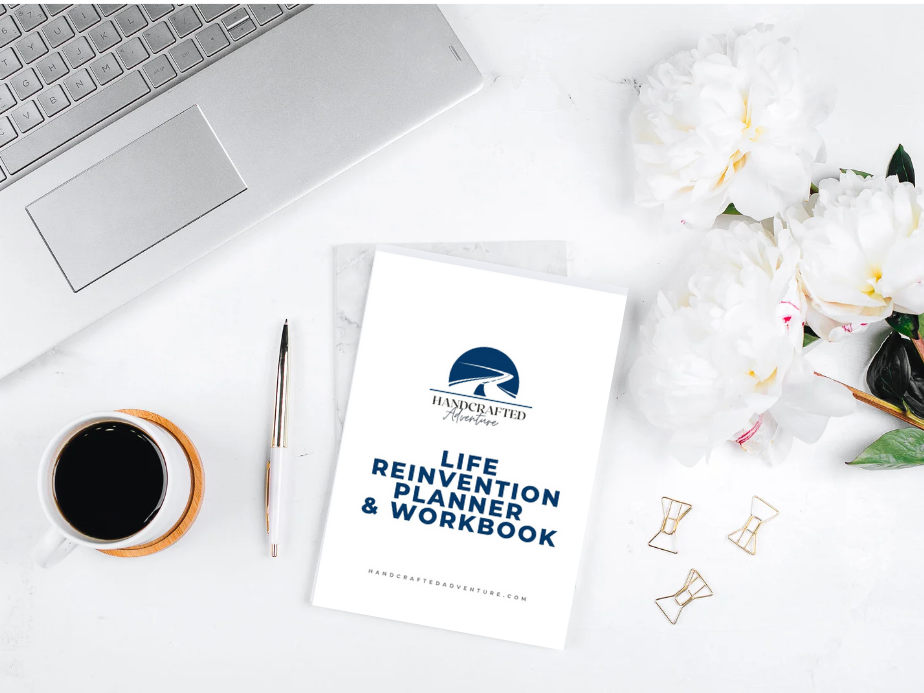
I created the Life Reinvention Planner & Workbook from the same process I’ve used in my own life.
It’s not a workbook that asks you to invent a perfect future and then map out the next five years.
It helps you look honestly at where you are, figure out what matters now, identify what’s getting in the way, choose a direction to test, and build the next steps around your actual life.
If you’re at the something needs to change, but I’m not sure what stage, that’s exactly what it was made for.